Ramadan already restructures your day around fasting and prayer — which makes it one of the most natural times to also build a dedicated dhikr habit, since your daily rhythm is already shifting. This guide lays out a simple 30-day structure for making remembrance a consistent part of the month, not just an occasional extra.
Why Is Ramadan a Good Time to Build a Dhikr Habit?
Ramadan is an effective time to build a dhikr habit because the month already comes with heightened spiritual focus, a restructured daily schedule around fasting and prayer, and specific narrated virtues tied to extra worship — all of which lower the friction of starting something new compared to an ordinary month.
Many people find habits started during Ramadan easier to carry into the rest of the year, since 30 days of daily repetition is close to the range most habit research points to for an action becoming automatic. See building a daily dhikr streak for the general principles behind that.
What Should a Ramadan Dhikr Plan Actually Include?
A practical Ramadan dhikr plan should include a fixed daily minimum you'll actually keep every day (not an ambitious one you'll abandon by day five), the post-salah 33-33-34 tasbih after each prayer, morning and evening adhkar, and additional Istighfar or Salawat during the times between taraweeh and suhoor.
- Post-salah tasbih: The 33-33-34 SubhanAllah-Alhamdulillah-Allahu Akbar count after each of the five prayers — see dhikr after prayer for the full method.
- Morning and evening adhkar: Anchored to Fajr and Asr as usual — see the morning adhkar routine and evening adhkar guide.
- Extra Istighfar: Many people set a personal daily target (100, 300, or more) during Ramadan specifically, given the month's emphasis on seeking forgiveness.
- Dhikr during waiting periods: Time before iftar and between taraweeh rak'ahs is naturally available for extra remembrance without adding to your schedule.
How Do You Structure 30 Days Without Burning Out?
The most sustainable way to structure a 30-day Ramadan dhikr plan is to keep the daily minimum small and consistent throughout the entire month, rather than starting with an ambitious count in the first week and quietly dropping it by the third.
A common approach is to keep the same fixed daily target — for example, post-salah tasbih plus 100 Istighfar — from day one through day thirty, rather than escalating the count as the month goes on. Consistency across all 30 days matters more than intensity in any single week.
Should You Focus on Specific Phrases During Ramadan?
There's no requirement to use different dhikr phrases specifically for Ramadan — the same core phrases (SubhanAllah, Alhamdulillah, Allahu Akbar, Astaghfirullah, La ilaha illallah) apply — though many people add extra Istighfar and Salawat given the month's emphasis on forgiveness and connection to the Prophet ﷺ.
The last ten nights, in particular, are commonly associated with increased dhikr and dua, given the presence of Laylatul Qadr within them. Some people specifically increase their Istighfar and dua count during this final stretch rather than keeping a flat daily target throughout.
How Do You Track a 30-Day Dhikr Challenge?
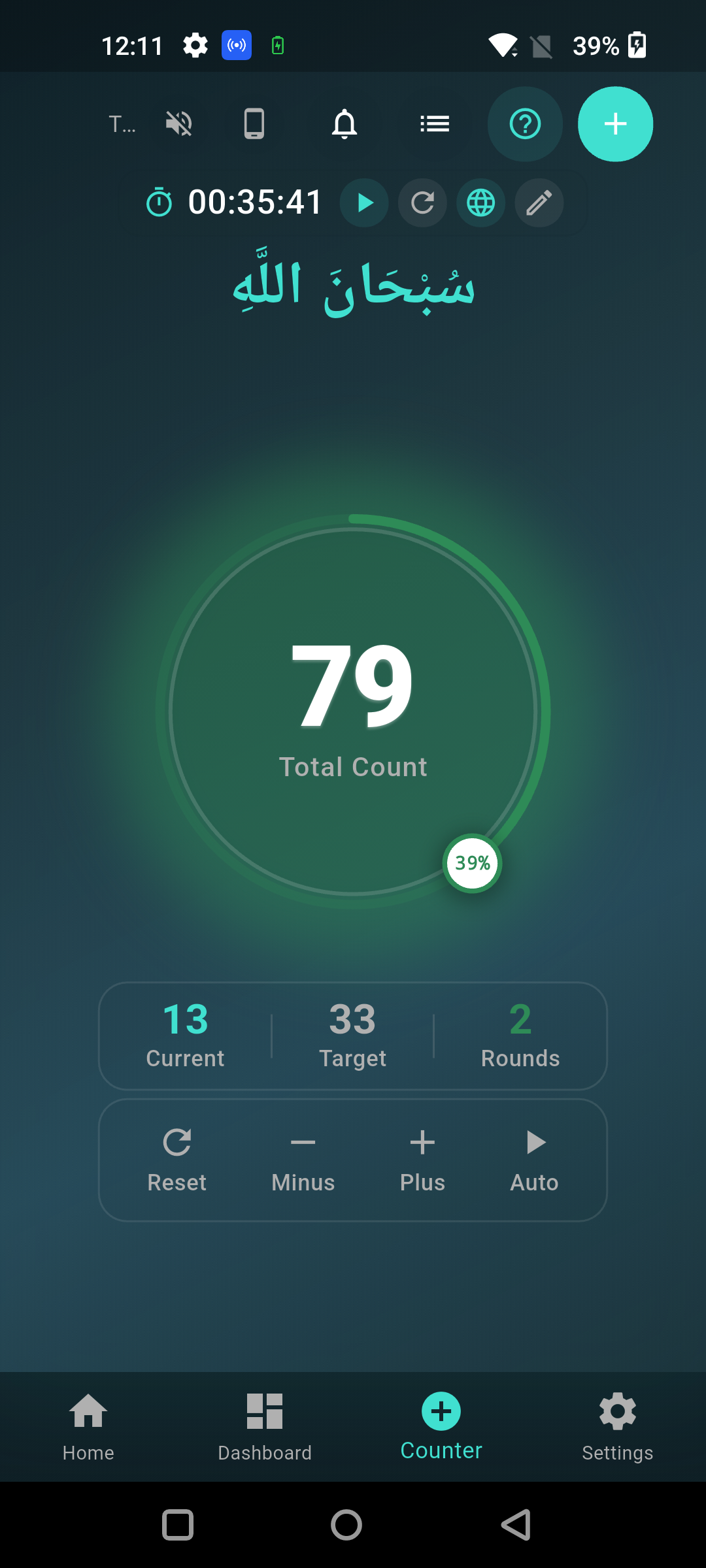
The most reliable way to track a 30-day dhikr challenge is with a tool that shows a daily streak and running total automatically, since manually remembering "did I do this yesterday" over 30 days is exactly the kind of tracking most people lose accuracy on by week two.
A dedicated counter app with saved presets and daily history removes that tracking burden entirely — you set your target once and the app shows your progress and streak without needing a separate journal or spreadsheet.
FAQ
Do I need to complete all 30 days perfectly for the challenge to count? No — missing a day doesn't invalidate the effort; the goal is overall consistency across the month, and picking back up the next day matters more than a perfect unbroken streak.
What's a reasonable daily dhikr target during Ramadan for a beginner? A reasonable starting target is the post-salah tasbih (already built into your five daily prayers) plus 100 Istighfar — small enough to sustain for 30 days, and it can be increased in future years once it feels automatic.
Is it better to do extra dhikr during the day or specifically at night? Both are valid, though many people increase dhikr specifically during the last third of the night and the last ten nights of Ramadan, given their narrated significance.
Can this dhikr plan continue after Ramadan ends? Yes — many people intentionally use Ramadan to establish a habit (like post-salah tasbih or daily Istighfar) specifically so it carries into the rest of the year rather than stopping at Eid.
Do I need a special app for a Ramadan dhikr challenge, or does a regular counter work? A regular dhikr counter app works fine — you don't need a Ramadan-specific app, just one that lets you set a daily target and track your streak and history consistently.
Start Your 30-Day Dhikr Challenge
Ramadan is a natural starting point for a lasting dhikr habit. Download the free Tasbeeh Counter app to set your daily target and track your streak throughout the month, offline and private.