Right after the final salam of each of the five daily prayers is one of the most consistent moments Muslims have for remembrance — and one of the easiest to rush through or skip when life gets busy. This guide walks through the exact counts, the order, and practical ways to make sure post-salah dhikr actually happens every time, not just when you remember.
What Is the Dhikr Recited After Prayer?
The dhikr recited after each of the five daily prayers is a set of three phrases repeated in a fixed order: SubhanAllah (Glory be to Allah) 33 times, Alhamdulillah (All praise is due to Allah) 33 times, and Allahu Akbar (Allah is the Greatest) 34 times, totaling 100 repetitions.
This sequence comes from Sahih Muslim (Hadith 596), where the Prophet ﷺ taught his companions this exact pattern after prayer. Some narrations describe saying all three phrases 33 times each and then completing the hundred with "La ilaha illallah wahdahu la sharika lah..." — either version is commonly practiced, and both are considered authentic ways to close out the count.
Why Count Dhikr Right After Prayer Specifically?
The moments immediately after salah are singled out because the heart is already turned toward Allah — you've just finished standing, bowing, and prostrating in worship, and the post-salah dhikr extends that state instead of breaking it abruptly to move on with your day.
There's also a practical reason: doing it immediately, before standing up or reaching for your phone, means it actually gets done. Delayed dhikr rarely happens — "I'll do it later" is how most people end up skipping it three prayers out of five. For more on why counted remembrance matters in general, see benefits of tasbeeh counting.
How Do You Count to 33 Without Losing Track?
Most people count to 33 either on their right-hand finger joints, on a string of prayer beads, or with a digital counter app — the finger method uses the natural joints of the hand to reach 33 without any tool, while beads and apps track the number for you automatically.
- Finger counting: Count along the joints of the fingers of the right hand, restarting the cycle for each of the three phrases. See our full walkthrough in how to count tasbeeh on fingers.
- Prayer beads (tasbih): A 33-bead tasbih is sized exactly for this — one full pass equals one phrase's count. Read the misbaha prayer beads guide if you're choosing your first set.
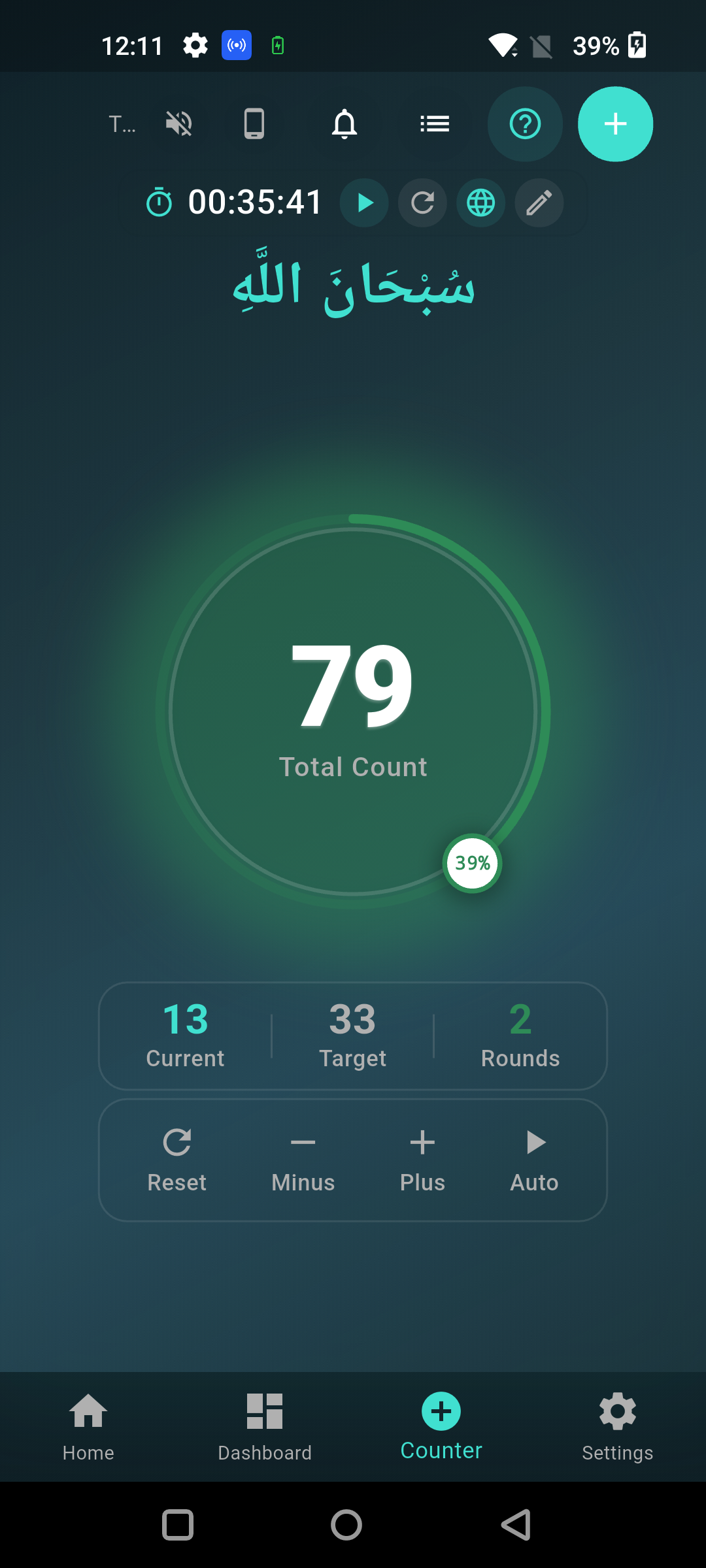
- Digital counter app: Tap once per repetition, with the app tracking the running total and switching presets between SubhanAllah, Alhamdulillah, and Allahu Akbar. This removes any risk of losing count mid-phrase.
Can You Do Post-Prayer Dhikr Without Beads or an App?
Yes — finger counting works for any of the five prayers with no tool at all, and many scholars note it was the method the Prophet ﷺ himself used, since the fingers "will be questioned and made to speak" on the Day of Judgment.
If you're somewhere beads and a phone aren't practical (mid-conversation, driving, holding a child), finger counting is the fallback that always works. It just takes more concentration to avoid losing your place across three separate counts of 33-33-34.
Does the Order of SubhanAllah, Alhamdulillah, and Allahu Akbar Matter?
The most commonly narrated order is SubhanAllah first, then Alhamdulillah, then Allahu Akbar — but some valid narrations describe other orderings, so consistency in your own practice matters more than which specific sequence you choose.
If you're new to this dhikr, sticking to the SubhanAllah-Alhamdulillah-Allahu Akbar order is the safest default since it's the most widely taught version. For the full meaning and pronunciation of each phrase, see what to say when counting tasbih.
FAQ
Do I have to say the dhikr immediately after salam, or can I wait? It's preferred to say it immediately after the salam, while still seated, before speaking or standing up — this is when the narrations describe the Prophet ﷺ doing it, and it's also the most reliable way to make sure it actually happens.
What if I lose count partway through 33? If you lose count, the safest approach is to round down to the last number you're confident about and continue from there, rather than guessing high. Using beads or an app removes this problem entirely.
Is 100 the only valid total, or can I do more? 100 is the specific count narrated in Sahih Muslim 596, but there's no restriction on doing additional dhikr afterward — many people add extra SubhanAllah or Astaghfirullah beyond the 100 as personal, optional remembrance.
Can I do this dhikr for prayers I pray alone versus in congregation? Yes, the post-salah dhikr applies equally whether you prayed alone or in congregation — it's tied to completing the prayer itself, not to the setting.
Is there a difference between "post-salah dhikr" and general daily dhikr? Post-salah dhikr refers specifically to this fixed 33-33-34 sequence said right after each prayer, while general daily dhikr can be any phrase, at any time, in any count you choose.
Make Post-Salah Dhikr a Reliable Habit
Counting 33-33-34 five times a day is simple in theory but easy to lose track of in practice. If you'd like a distraction-free way to keep the count accurate after every prayer, download the free Tasbeeh Counter app — it saves your dhikr presets, tracks totals automatically, and works fully offline.