Most people don't struggle to start dhikr — they struggle to keep doing it past the first few enthusiastic days. This guide covers practical, low-friction ways to build dhikr into a genuine daily habit, using the same principles that make any habit stick.
Why Is Dhikr Hard to Keep Consistent?
Dhikr is hard to keep consistent for the same reason most voluntary habits are — there's no external deadline forcing it, unlike the five daily prayers, so it's the first thing to get skipped when the day gets busy or you simply forget.
The gap between "wanting to do more dhikr" and "actually doing it every day" is almost always a friction problem, not a motivation problem. Reducing the number of decisions and steps required to start counting is more effective than relying on willpower alone.
What's the Simplest Way to Start a Dhikr Habit?
The simplest way to start a dhikr habit is to attach it to something you already do every day without fail — like the moments right after each prayer — rather than trying to schedule it as a separate task.
This is exactly why the post-salah 33-33-34 tasbih works so well as a starting habit: the prayer itself is the reminder, five times a day. See dhikr after prayer for the full breakdown of that specific routine if you're starting from zero.
How Long Does It Take for Dhikr to Become a Habit?
There's no fixed universal number, but most habit research suggests somewhere between three and eight weeks of daily repetition before an action starts to feel automatic rather than effortful — the key variable is consistency, not intensity.
Doing a small amount of dhikr every single day builds the habit faster than doing a large amount inconsistently. Ten repetitions done daily for a month will feel more automatic than 500 repetitions done once and then abandoned.
Does Tracking a Streak Actually Help?
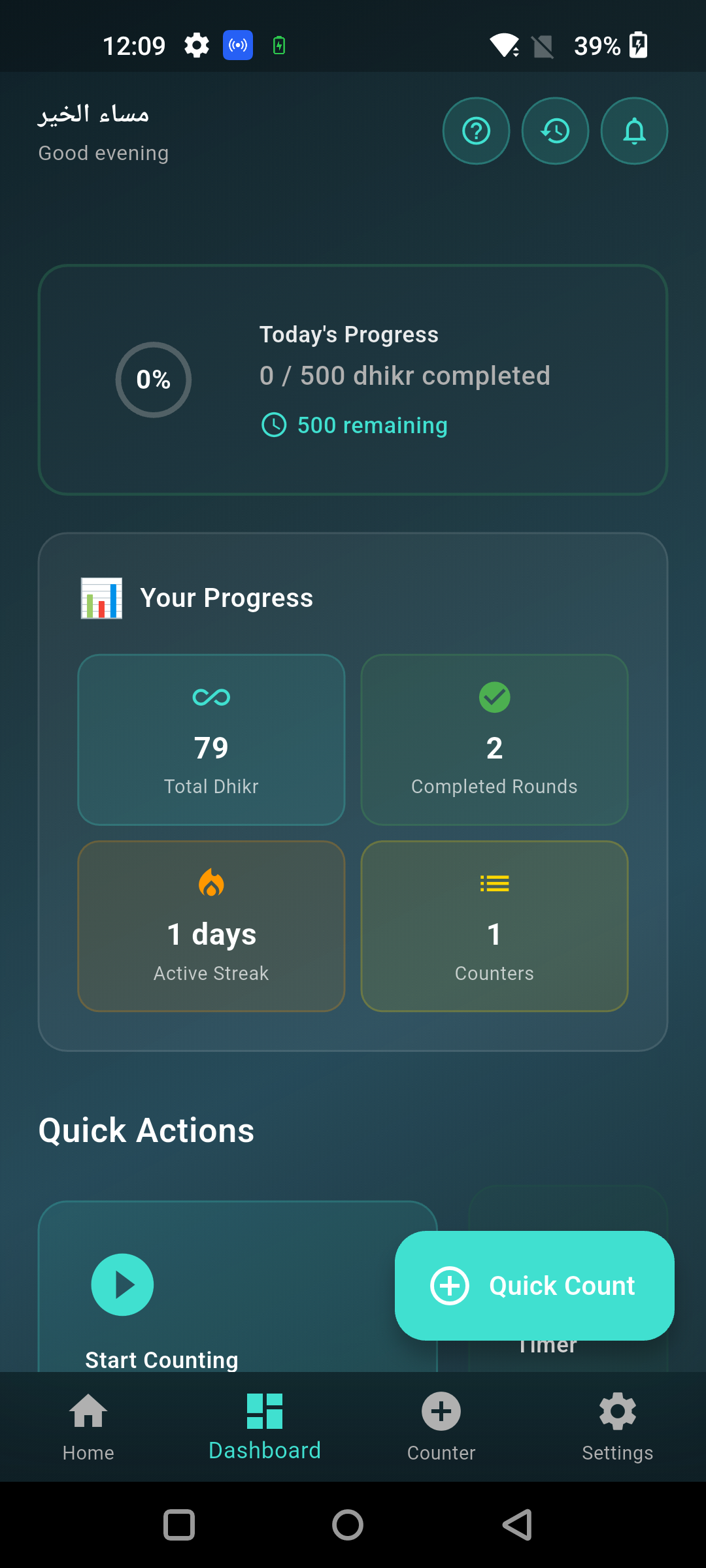
Yes — seeing a visible streak count (how many consecutive days you've completed your dhikr) taps into a well-documented behavioral pattern where people are motivated to avoid breaking a visible chain of consistency, similar to how habit-tracking apps use streaks for exercise or reading.
This is one practical reason to use a counter app instead of just relying on memory — a saved history and streak count gives you a concrete, visible record of consistency that mental tracking alone can't provide.
What Are Practical Ways to Build a Daily Dhikr Streak?
The most effective way to build a daily dhikr streak is to start with a small, specific, and time-anchored target — such as the 33-33-34 post-salah count after just one prayer — and expand from there once it feels automatic.
- Start with one prayer, not five: Anchor your first habit attempt to a single prayer (many people choose Fajr or Maghrib), then expand once it's consistent.
- Set a small daily target: A modest, achievable count you'll actually hit beats an ambitious one you'll abandon after missing it once.
- Track your streak visibly: Use a counter app's history feature, a physical calendar, or a simple tally — visibility matters more than the method.
- Don't let one missed day end the effort: Missing a day breaks the streak number, not the habit itself — restart the next day rather than treating it as failure.
- Pair it with existing habits: Morning coffee, commute, or right after prayer — attaching dhikr to an existing routine removes the need to "remember" separately.
FAQ
What happens if I miss a day in my dhikr streak? Missing a day resets the streak count, but it doesn't erase the habit you've built — the most effective response is to simply continue the next day rather than treating a missed day as a reason to stop entirely.
Should I start with a large daily dhikr target or a small one? Start with a small, easily achievable target — a habit that feels effortless is far more likely to become consistent than an ambitious one that feels like a chore from day one.
Is it better to track dhikr with an app or just count mentally? An app or physical counter is more reliable for tracking than mental counting, since it removes the risk of losing count and gives you a visible history to reinforce consistency over time.
Does a dhikr streak have any religious significance, or is it just a motivation tool? A streak itself has no specific religious ruling — it's a practical motivation tool borrowed from general habit-building, used to support the religiously significant goal of consistent remembrance (dhikr), which is encouraged in the Quran (33:41).
Can I build a dhikr streak around phrases other than the post-salah tasbih? Yes — a streak can be built around any dhikr phrase or practice, including Istighfar, Salawat, or Quran recitation; the post-salah tasbih is just a common starting point because it's already anchored to a daily action.
Start Your Streak Today
Consistency beats intensity when it comes to dhikr. Download the free Tasbeeh Counter app to track your daily streak, save presets, and build remembrance into a habit that sticks.