"Evening adhkar" gets searched almost as often as its morning counterpart, and the two are frequently confused — some people recite the morning set at night by mistake, missing the specific evening wording. This guide covers what evening adhkar actually contains, when to recite it, and how it differs from morning adhkar.
What Is Evening Adhkar?
Evening adhkar is a fixed set of remembrance phrases and supplications recited after Asr prayer or shortly before Maghrib, mirroring the morning adhkar set but with wording adjusted to reference the evening ("amsayna," "we have entered the evening," instead of "asbahna").
Like morning adhkar, it draws mainly from the Hisnul Muslim compilation and includes Ayat al-Kursi, the Mu'awwidhatayn, and a series of protection duas — the content overlaps heavily with the morning adhkar routine, which is worth reading alongside this guide since most people learn both together.
When Should Evening Adhkar Be Recited?
Evening adhkar is best recited between Asr and Maghrib, based on the narrated timing of "evening" (masa) in the relevant hadith — reciting it too close to or after Maghrib is common in practice but not the ideal window described in the narrations.
In practical terms, most people fit it in right after Asr prayer, the same way morning adhkar gets anchored to Fajr. If Asr-to-Maghrib doesn't work with your schedule, reciting it any time before sleeping is still far better than skipping it.
What Duas Are Included in Evening Adhkar?
The evening adhkar set includes the same core structure as morning adhkar — Ayat al-Kursi, Surah al-Ikhlas, al-Falaq and an-Nas three times each, and general protection duas — with "amsayna" ("we have entered the evening") replacing "asbahna" in the relevant phrases.
- "Amsayna wa amsal mulku lillah..." — the evening counterpart to the morning ownership dua.
- Ayat al-Kursi and the Mu'awwidhatayn — recited the same way as in the morning set.
- Duas for protection through the night — asking for safety while sleeping and protection from harm until morning.
- Sayyid al-Istighfar (evening version) — the wording shifts slightly from the morning recitation to match the time.
Is Evening Adhkar the Same as Sleep Duas?
No — evening adhkar is recited between Asr and Maghrib, while sleep duas (adhkar an-nawm) are a separate, shorter set recited right before going to bed, closer to when you actually lie down to sleep.
People often conflate the two because both happen later in the day, but they serve different windows: evening adhkar closes out the daytime, while sleep duas specifically prepare you for the night. It's common to recite both — evening adhkar after Asr, and sleep duas right before bed.
How Do You Remember to Recite Evening Adhkar Every Day?
The most reliable way to remember evening adhkar is to attach it to a prayer you already perform daily — reciting it immediately after Asr, before standing up or getting distracted by anything else.
- Anchor it to Asr, not a clock time: Prayer times shift daily; a fixed clock reminder drifts out of the actual window over weeks.
- Keep the text in one place: A dedicated dua book, app, or saved note avoids the friction of searching each time.
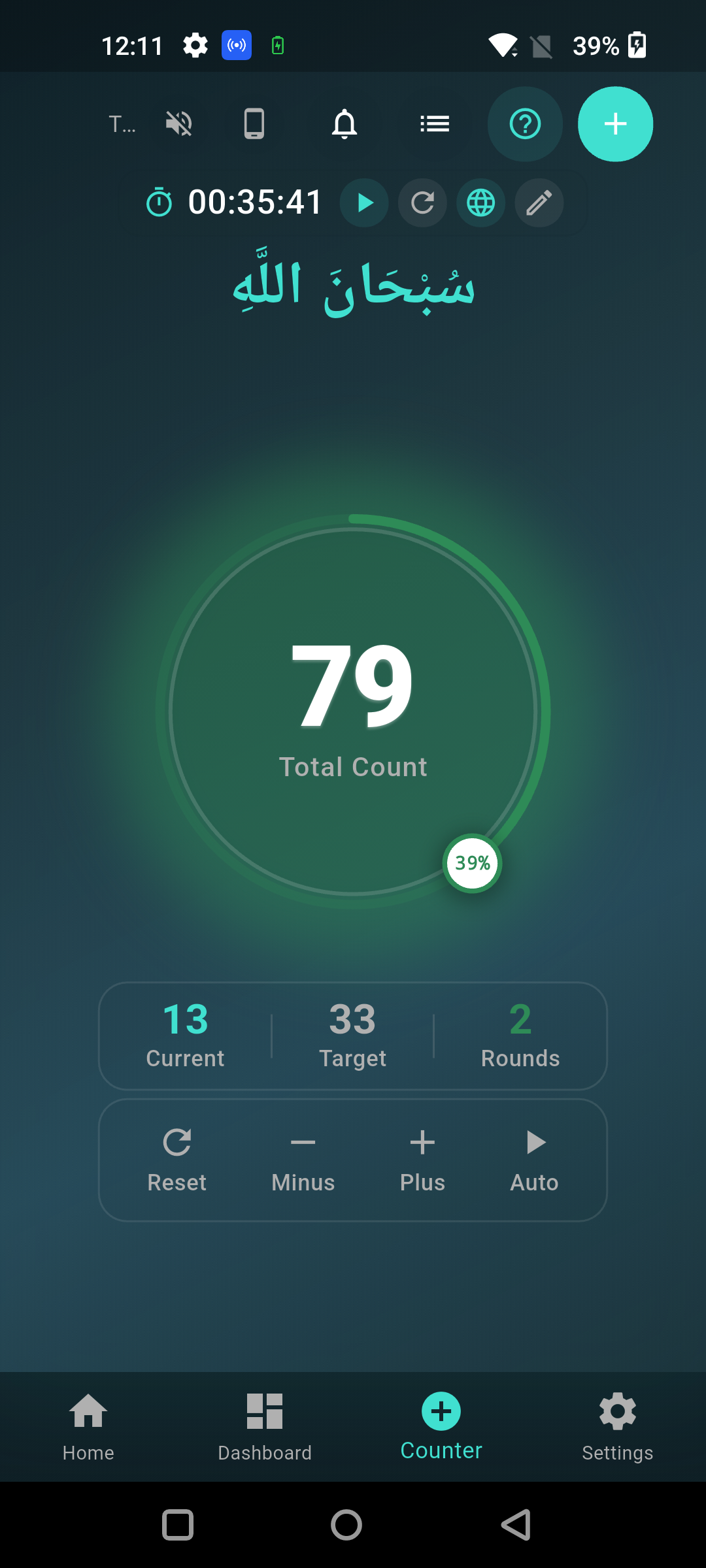
- Pair it with your dhikr count for the day: If you're already tracking SubhanAllah or Astaghfirullah totals, adding evening adhkar to the same routine keeps everything in one habit rather than two separate ones.
FAQ
Can I recite evening adhkar after Maghrib if I missed the Asr-to-Maghrib window? Yes, if you miss the ideal Asr-to-Maghrib window, reciting evening adhkar later in the evening is still valid and better than not reciting it at all.
Is there a shortened version of evening adhkar for busy days? Yes — many people recite just Ayat al-Kursi and the three Quls (al-Ikhlas, al-Falaq, an-Nas) on busy days as a shortened evening adhkar, then return to the fuller set when they have more time.
Do evening adhkar and post-Asr sunnah prayers happen at the same time? They can be combined — many people pray any sunnah or nafl prayers first, then recite evening adhkar immediately after, keeping both in the same post-Asr window.
Why does the wording change between morning and evening adhkar? The wording changes because several duas explicitly reference the time of day ("asbahna" for morning, "amsayna" for evening) as part of affirming that both day and night belong to Allah's dominion — reciting the wrong version isn't sinful, but it doesn't match the intended meaning.
Is evening adhkar recited in Arabic only, or can I say it in English? Evening adhkar can be recited in any language you understand, though many people learn the Arabic wording over time since it's the original text — using a transliteration alongside the Arabic is a common way to start.
Close Out Your Day With Consistent Remembrance
Evening adhkar is easy to skip once the day gets busy. If you'd like a simple, private way to track your daily dhikr counts alongside your adhkar routine, download the free Tasbeeh Counter app — it works fully offline and never shares your data.