"Morning adhkar" is one of the most-searched Islamic remembrance topics online, and for good reason — the short window between Fajr and sunrise is when many Muslims try to fit in a fixed set of protective duas before the day takes over. This guide covers what morning adhkar actually is, why the timing matters, and how to build a routine you'll actually keep.
What Does "Adhkar" Mean?
Adhkar (أذكار) is the plural of dhikr — it refers to a collection of specific remembrance phrases and supplications, as opposed to dhikr generally, which can mean any act of remembering Allah, counted or not.
"Morning adhkar" and "evening adhkar" specifically refer to two fixed sets of duas narrated from the Prophet ﷺ, traditionally recited after Fajr and after Asr (or before Maghrib) respectively. They're distinct from the 33-33-34 post-salah tasbih — adhkar are typically longer phrases with specific wording, not just repeated single words. For that shorter post-prayer count, see our guide on dhikr after prayer.
Why Recite Adhkar Specifically in the Morning?
Morning adhkar is recited early because several of its phrases explicitly reference "morning" (asbahna, "we have entered the morning") and function as a request for protection over the day ahead — reciting them after the day is underway loses that framing.
There's also a habit-formation reason: doing it right after Fajr, before checking your phone or starting your day, means it's far less likely to get pushed aside. Waiting until "later" is the most common reason morning adhkar doesn't happen consistently.
What's Actually Included in Morning Adhkar?
A typical morning adhkar set includes Ayat al-Kursi, the last two verses of Surah al-Baqarah, Surah al-Ikhlas, al-Falaq, and an-Nas (each three times), and a series of short duas asking for protection, well-being, and guidance for the day — the exact compilation varies slightly between books like Hisnul Muslim and local traditions.
- Ayat al-Kursi (Quran 2:255) — widely narrated as protection when recited morning and evening.
- The Mu'awwidhatayn (Surah al-Ikhlas, al-Falaq, an-Nas) — recited three times each in most compilations.
- "Asbahna wa asbahal mulku lillah..." — a dua affirming the morning belongs to Allah's dominion.
- Sayyidul Istighfar — the "master supplication for forgiveness," recited once in the morning per its narration.
- General protection duas — covering health, family, provision, and safety for the day.
How Long Does Morning Adhkar Take?
A complete morning adhkar routine, read at a normal pace without rushing, typically takes 10 to 15 minutes — shorter if you memorize the shorter set, longer if you include every dua from a full Hisnul Muslim-style compilation.
Many people start with a shortened version — Ayat al-Kursi, the three Quls, and two or three short duas — and build up to the fuller set over weeks. A shorter routine done daily is more valuable than a long one abandoned after three days.
How Do You Actually Stick to a Morning Adhkar Routine?
The most reliable way to stick to a morning adhkar routine is to anchor it to an existing fixed action — right after Fajr prayer, before leaving the prayer mat — rather than treating it as a separate task to remember later in the day.
- Anchor it to Fajr: Recite it while still seated after salah, the same way post-prayer tasbih works.
- Use a physical or digital reminder: A bookmark in a dua book, or a saved preset in a counter app, removes the "which duas again?" friction.
- Start smaller than you think you need to: Five minutes done consistently beats fifteen minutes done twice a week.
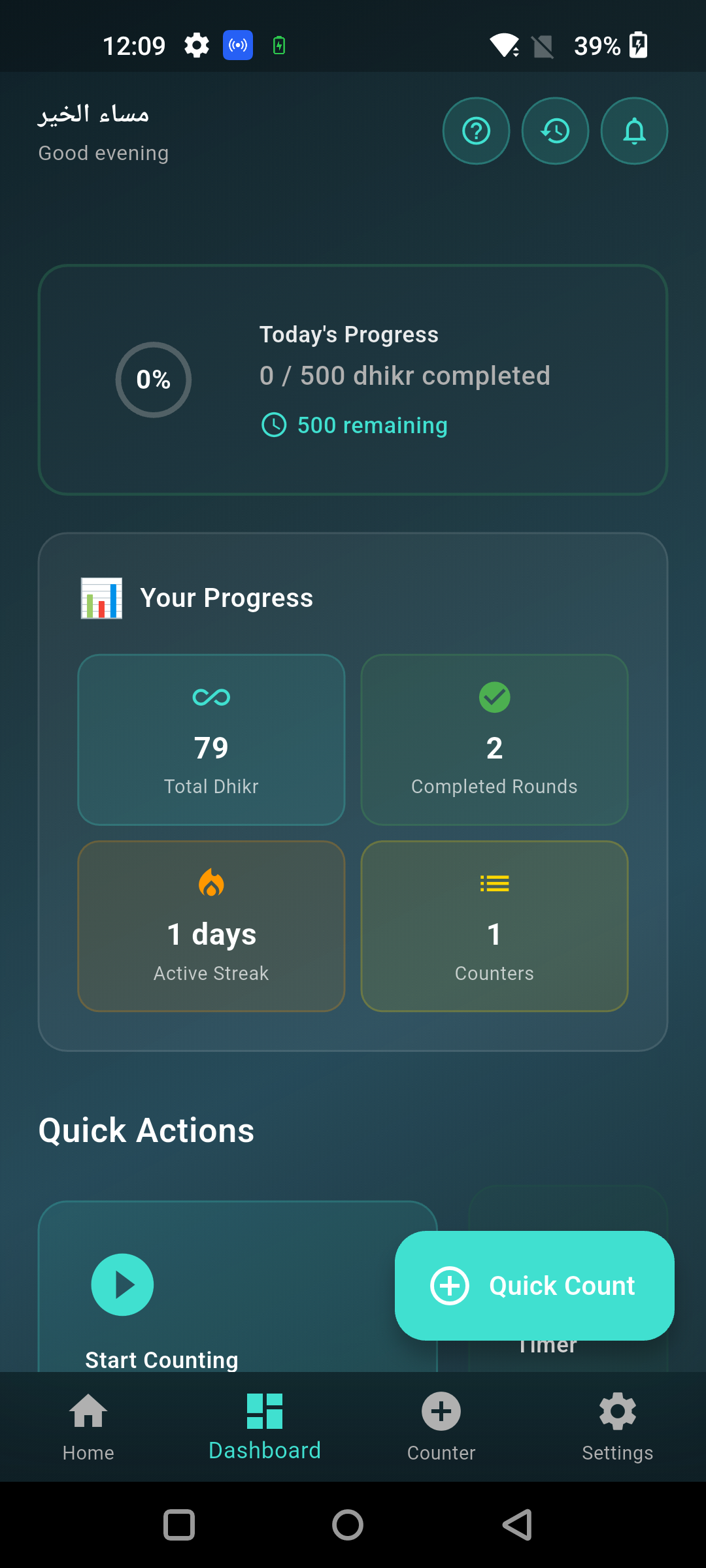
- Track your streak: Seeing consecutive days completed is a strong, low-effort motivator — see build a daily dhikr streak for more on this.
FAQ
What's the difference between morning adhkar and evening adhkar? Morning adhkar is recited after Fajr and references the morning in its wording, while evening adhkar is recited after Asr or before Maghrib and references the evening — the content overlaps significantly, but the phrasing of key duas differs to match the time of day. See our evening adhkar guide for the full comparison.
Is morning adhkar obligatory? No, morning adhkar is not obligatory (fard) — it's a strongly recommended (mustahabb) practice based on the Prophet's ﷺ regular habit, not a pillar of Islam like the five daily prayers.
Can I recite morning adhkar later than right after Fajr? Yes, morning adhkar can generally be recited any time between Fajr and midday if you miss the immediate post-prayer window, though reciting it right after Fajr is the most commonly practiced timing.
Do I need wudu to recite morning adhkar? No, wudu is not a requirement for reciting adhkar or dua, unlike salah — though many people naturally recite it while still in wudu from Fajr prayer.
What's a good app or book to learn morning adhkar from? Hisnul Muslim ("Fortress of the Muslim") is the most widely used compilation of morning and evening adhkar, available as a physical book or app with Arabic, transliteration, and translation side by side.
Build Your Morning Routine Around Consistent Remembrance
Morning adhkar works best as a fixed habit, not a once-in-a-while effort. If you want a simple way to track your daily dhikr streak alongside your adhkar routine, download the free Tasbeeh Counter app — it's private, works offline, and helps you stay consistent day after day.