Muslims comparing dhikr apps often land on two very different names: Tasbeeh Counter, a free, offline-first counter built around private, local counting, and Zikar (zikar.app), a newer app built around shared dhikr with family and friends. Both help with the same basic need — keeping an accurate count during tasbih, tahlil, salawat, or istighfar — but they are built on different assumptions about what a dhikr app should do beyond counting.
This guide compares the two honestly. Every claim about Zikar below is drawn from its own public website and app store description at the time of writing; app features and pricing change, so treat this as a snapshot rather than a permanent record and check the current listing before deciding. A counter, whichever one you pick, is only a tool: it should support attentive remembrance, never replace it. Allah instructs believers to remember Him often in Quran 33:41, and no app changes what that remembrance means.
Quick answer: choose Tasbeeh Counter if you want a private, offline, no-account counter with custom targets and optional prayer-time tools. Choose Zikar if group accountability — family dhikr circles, streaks, and a shared leaderboard — matters more to you than working fully offline.
Which app should you choose, Tasbeeh Counter or Zikar?
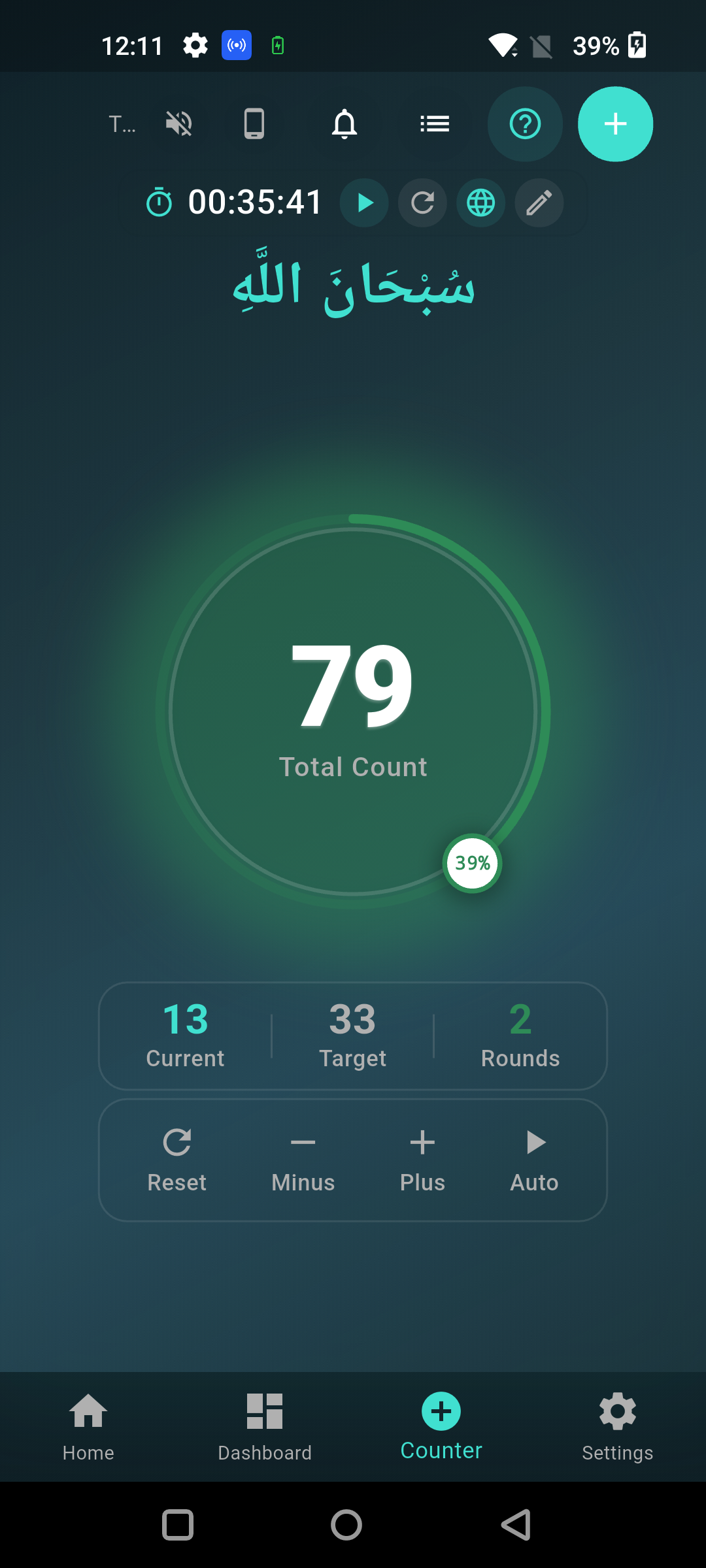
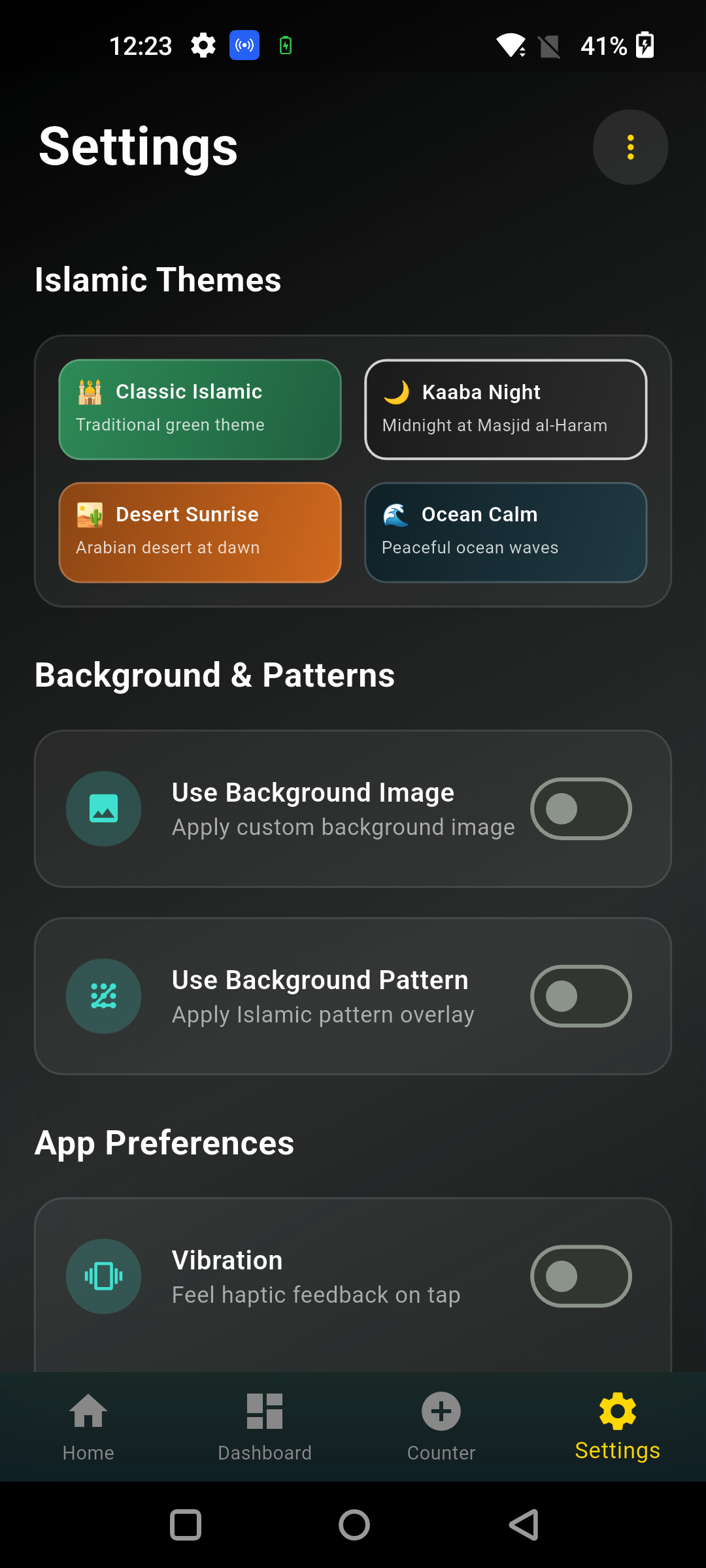
Choose based on whether you count alone or want to count with others. Tasbeeh Counter is built for private, distraction-free counting: no forced account, local session storage, custom targets and round tracking, adjustable sound and haptic feedback, several visual themes, and optional on-device prayer-time calculation. Zikar, according to its website, is built around structured adhkar content and social accountability: morning and evening azkar, after-salah azkaar, a library of duas from Hisnul Muslim, personal streaks, and family or friend groups with a shared leaderboard, plus optional pairing with a Bluetooth smart tasbih ring. Neither approach is objectively better — they answer different questions about why someone opens a dhikr app in the first place.
| Feature | Tasbeeh Counter | Zikar (per zikar.app) |
|---|---|---|
| Core counting | Offline, unlimited, no account | Free tier with daily dhikr sessions |
| Custom targets & rounds | Yes, named sessions with targets | Custom azkar slots (limited on the free tier) |
| Session history | Local history and statistics | Streaks, consistency tracking |
| Group / shared dhikr | Community campaigns you can create or join | Family groups with a live leaderboard (limited groups on free tier) |
| Prayer-time tools | Optional, on-device calculation | Not documented on the public site |
| Hardware accessory | Hardware volume-button counting | Optional Bluetooth smart tasbih ring pairing |
| Dua/adhkar library | Built-in dhikr library, pre-built and custom | 85+ duas cited from Hisnul Muslim, per its website |
| Paid tier | Not required for core counting | Optional paid plan for unlimited azkar slots and advanced analytics |
| Account requirement | Not required for the counter | Groups and sync appear to need sign-in, per its website |
What does Zikar offer that Tasbeeh Counter does not?
Zikar's clearest differentiator is social dhikr: family groups, streaks, and a shared leaderboard built into the core experience. Its website describes creating or joining a group, seeing a family's combined count and streak update in real time, and being motivated by others doing dhikr alongside you — something closer to a habit-tracking app than a plain counter. It also lists a curated library of 85 or more duas sourced from Hisnul Muslim, structured morning and evening adhkar and after-salah azkaar as built-in content rather than something the user has to add themselves, and optional pairing with a Bluetooth tasbih ring for hands-free counting while driving or cooking. Its free tier, per the site, includes daily dhikr sessions, the dua library, a limited number of custom azkar slots, and a small number of family groups, with a paid plan removing those limits and adding analytics. If a shared family routine, a ready-made dua library, or ring hardware support matters to you, these are real, verifiable reasons to consider Zikar. We have not independently verified its star rating, install count, or full privacy policy, so check those directly on its store listing before installing.
What does Tasbeeh Counter offer that Zikar does not?
Tasbeeh Counter's advantage is that its core counting works fully offline with no account and minimal data collection. You can open the app, name a dhikr, set a target of 33, 99, or any custom number, count in rounds, and see your session history without creating a profile or connecting to a group. It also includes optional, on-device prayer-time calculation with location handled locally, adjustable sound and vibration feedback, several Islamic-themed visual styles, and hardware volume-button counting for a screen-free tap. Tasbeeh Counter does also offer a community feature — you can create or join a campaign and see a group's combined contribution — but it is a newer, opt-in addition rather than the center of the app, and it is anonymous-first: nothing is required beyond a display name, and the counter works identically whether you ever touch that feature or not. If your priority is a quiet, private tool that never depends on a connection or a group, that is where Tasbeeh Counter is built to be stronger.
How do the two apps compare on privacy and pricing?
Tasbeeh Counter's core counter needs no account and stores dhikr sessions on the device; Zikar's group and streak features, by its own description, appear to depend on sign-in and a connection to sync with other members. That is not a criticism of Zikar — social features cannot work without some shared, server-side state — but it is a real trade-off worth naming plainly: the more a dhikr app depends on groups, leaderboards, and cross-device sync, the more it necessarily needs an account and a network connection to deliver on that promise. On pricing, Tasbeeh Counter's core counting is free with no purchase needed to keep counting. Zikar's website describes a free tier covering daily sessions, a limited number of custom azkar slots, and a small number of family groups, with an optional paid plan for unlimited azkar slots, deeper analytics, and faster support. Neither company's rating, review count, or full data-safety disclosure is something we independently verified for this article; read the current Play Store or App Store listing for both before deciding.
Which one fits your routine?
If you count dhikr privately and want the smallest, most offline-friendly tool, Tasbeeh Counter is likely the better fit. If you want to build a shared family habit with streaks and a leaderboard, Zikar's group features are a genuine reason to consider it. Some people will reasonably want both: a private counter for personal wird, and a social app to keep a family accountable during Ramadan or a 40-day istighfar challenge. Try either for a few real sessions before committing. Check whether the counter itself is accurate, whether reset is protected from accidental taps, and whether the app's optional features — themes, reminders, groups, hardware pairing — genuinely help you remember Allah more consistently, or just add things to configure. For a deeper checklist on evaluating any dhikr app before you commit to it, see our guide on choosing the best tasbeeh counter app.
You can download the free Tasbeeh Counter app and test its offline counting, custom targets, and optional community campaigns against your own routine.
Frequently Asked Questions
Is Zikar a real, available app?
Yes. Zikar (zikar.app) is a published dhikr and tasbih-counting app with its own website describing family groups, streaks, and a dua library. We have not independently verified its current store rating or install numbers, so check its live Play Store or App Store listing for the latest figures.
Does Tasbeeh Counter have family or group features like Zikar?
Tasbeeh Counter has a newer community feature that lets you create or join a campaign and see a group's combined count, and it works anonymously with just a display name. It is not the center of the app the way Zikar's family groups appear to be, and it is a more recent addition, so expect it to be less mature than a feature Zikar has built its product around.
Which app works better without an internet connection?
Tasbeeh Counter's core counting and session history are designed to work offline with no account. Zikar's group, streak, and leaderboard features, based on its own description, depend on syncing with other members, which by nature needs a connection at some point even if basic counting works locally too.
Is either app free?
Both offer a free tier. Tasbeeh Counter's core counter is free with no purchase required to keep counting. Zikar's website describes a free tier with daily sessions, a limited dua and azkar allowance, and a small number of family groups, with an optional paid plan for higher limits and analytics. Confirm current pricing on each app's official listing before assuming either stays free forever.
Should the choice of app affect how I do dhikr?
No. A counter, private or social, is only a tool for keeping a number; it does not replace sincerity, correct wording, or attentiveness in remembrance of Allah. Choose whichever tool removes friction from your routine, and take questions about the religious form of a specific dhikr to a trusted local scholar.