A digital tasbeeh counter can be a phone app, a small handheld clicker, or a counter worn like a ring. All three can record repetitions, but they suit different routines. An app offers targets, saved sessions, and reminders. A clicker keeps the phone away. A ring stays on one finger and works well while walking or travelling.
This guide is for Muslims choosing a counter for salah, morning or evening adhkar, istighfar, salawat, or a personal wird. It compares the options honestly, including privacy, distraction, durability, feedback, and cost. Whichever tool you choose, it should support attentive remembrance rather than become the centre of the act. Allah tells believers to remember Him often in Quran 33:41.
Quick answer: choose an app for records and custom goals, a clicker for screen-free focus, and a ring for one-handed portability.
Which digital tasbeeh counter is best: app, clicker, or ring?
The best digital tasbeeh counter is the one you can use accurately without losing focus. Choose an app if you want custom targets, session history, themes, reminders, and several dhikr options in one place. Choose a physical clicker if you want a dedicated device with no notifications or screen. Choose a tasbeeh ring counter if you need discreet, one-handed counting while commuting, walking, or sitting after salah. None is automatically more sincere or more accurate: every option can help, and every option can distract if you keep checking the number. Cost, battery, comfort, and privacy also matter. For many people, the practical answer is not one tool forever. You might use an app at home, a ring outside, and your fingers when you have nothing else. If the categories are unfamiliar, read what a digital tasbih counter is before comparing the details.
| Option | Best for | Main strength | Main drawback |
|---|---|---|---|
| Phone app | Goals and regular routines | History, targets, reminders | Phone notifications can distract |
| Physical clicker | Quiet, focused sessions | Simple dedicated controls | Another item to carry |
| Ring counter | Travel and one-handed use | Small and easy to reach | Fit and button quality vary |
| Fingers | Any place, no equipment | Free and always available | No saved total or history |
How does a digital counter tasbeeh app compare with a physical clicker?
A digital counter tasbeeh app gives more guidance and records, while a physical clicker gives a simpler, screen-free experience. On an app, you can usually name a dhikr, set a target such as 33 or 100, see completed rounds, and return to a saved session. A dedicated clicker normally shows only the current number and has buttons to count and reset. That simplicity can be a benefit after salah because there are no messages, social apps, or bright screens nearby. The trade-off is that a clicker may forget its count when its battery fails, can be misplaced, and rarely provides useful history. A phone app also depends on the phone being charged, yet it does not add another object to your pocket. If you already carry your phone and value progress records, an app is usually more useful. If opening the phone pulls your attention elsewhere, the clicker is the wiser choice.
Where an app has the advantage
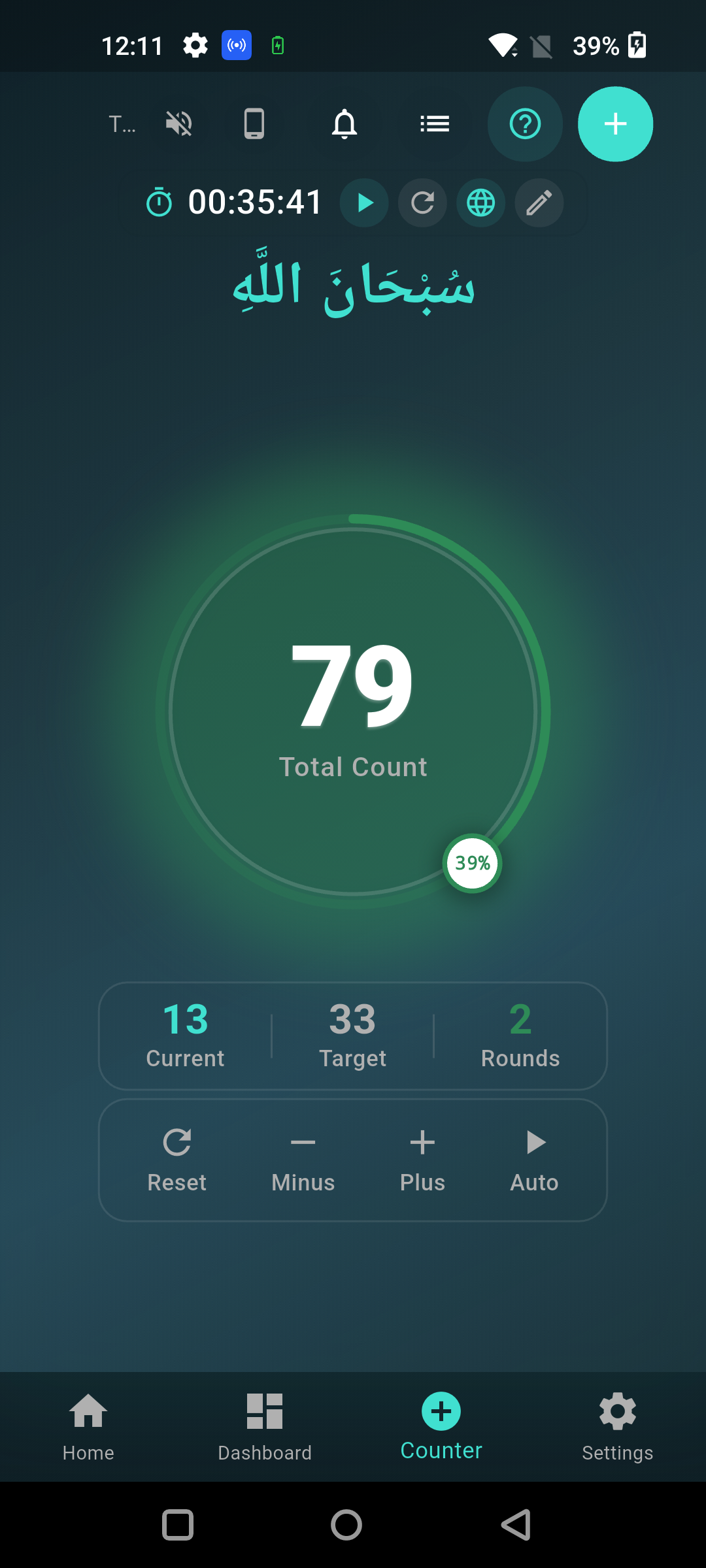
A well-designed digital tasbih counter can do more than add one number. Useful features include:
- custom dhikr names and targets;
- round tracking for repeated sets;
- adjustable sound or vibration feedback;
- saved sessions, streaks, and statistics;
- reminders that can be turned off;
- a dark or calm theme for comfortable reading.
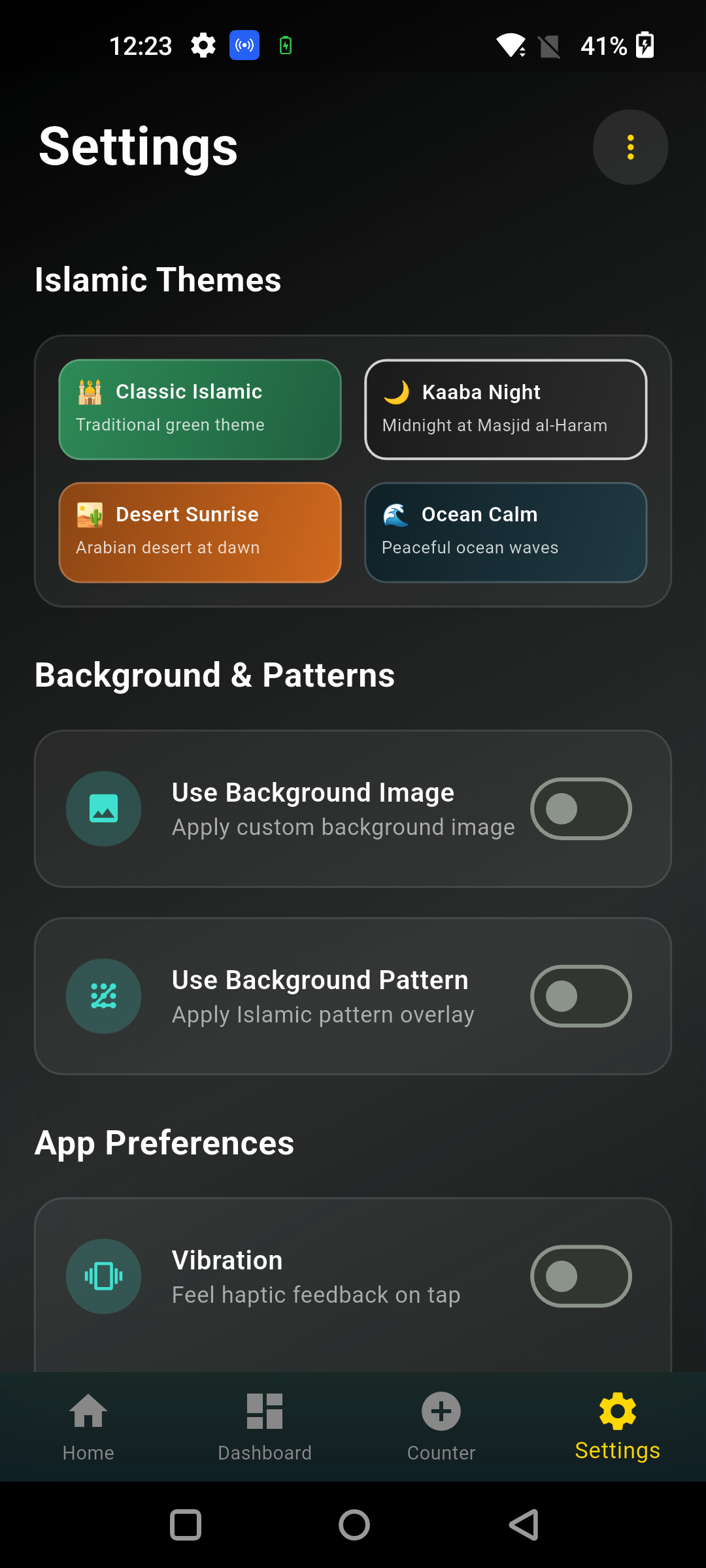
Tasbeeh Counter includes these types of counting and personalisation tools. Its core counter works offline, requires no account, and stores dhikr data on the device. That is helpful when mobile data is expensive, unreliable, or unavailable. Prayer-time calculation may use optional location permission, and update checks or online fonts can still use an internet connection; “offline counting” should not be mistaken for a claim that every optional service never connects.
Where a clicker has the advantage
A physical clicker starts quickly: hold it, press the count button, and reset only when you intend to. A model with a clear display, firm button, and memory after sleep may last through many sessions. It is also easier to leave beside a prayer mat as a dedicated object.
The limits are equally plain. Cheap buttons may double-count or miss presses, small batteries need replacing, and the reset button can be hit by accident. Test the feel before buying, especially if an older relative will use it. A larger button and readable display matter more than a long list of advertised modes.
Is a tasbeeh ring counter better for daily dhikr?
A tasbeeh ring counter is better when portability and one-handed counting matter more than detailed tracking. It sits on a finger or is held around one, so the thumb can press the main button without gripping a separate clicker. That makes it convenient on a bus in Karachi, a train in London, or a walk in Dhaka. Many ring counters are inexpensive and have a small display, and some electronic models add vibration or saved totals. However, comfort and build quality vary. A tight strap can become irritating, a loose ring may rotate, and a raised reset button can erase a session. It also remains a visible device, so it is not always as discreet as expected. Choose one with an adjustable band, protected reset control, readable digits, and count memory. A ring is a good everyday tool, but an app is better when you want named sessions, several targets, or a record of progress over time.
Mechanical and smart rings are not the same
Basic ring counters are tiny clickers with a display. Rechargeable “smart” rings may offer vibration, Bluetooth, or an accompanying app. More electronics can mean more settings and a higher price, but not necessarily better counting. Check whether the ring works without an account or connection and what the companion app collects.
For a basic model, press the button 20–30 times before relying on it. Confirm that every press registers once, the display remains visible, and the total survives a short idle period. These small checks reveal more than product photos.
What should you check before choosing a counter?
Check accuracy, reset protection, privacy, offline use, feedback controls, and comfort before choosing any counter. First, make 100 deliberate presses and compare the displayed total with your expected count. Next, see whether the reset action needs a long press or confirmation; an exposed one-touch reset is risky. For an app, read the privacy policy and permissions instead of accepting a vague “private” label. Ask whether an account is required, where session data is stored, and whether basic counting works without mobile data. Turn sounds and vibration on or off to see whether they support concentration. For hardware, inspect the button, display, strap, battery type, and count memory. Finally, think about your real setting: a bright screen may be fine at home but uncomfortable in a masjid, while a tiny ring display may be difficult for a parent to read. A counter earns its place through dependable use, not extra features alone.
Use this short buying checklist:
- Count accuracy: one press should equal one count.
- Safe reset: accidental clearing should be difficult.
- Readable display: digits should be clear in your normal lighting.
- Suitable feedback: sound and vibration should be optional.
- Count memory: check what happens after sleep, restart, or battery loss.
- Privacy: review permissions, accounts, analytics, and data storage.
- Offline function: test the core counter with airplane mode on.
- Comfort: make sure the grip or ring works for a full session.
When is counting tasbeeh on your fingers a better choice?
Counting tasbeeh on your fingers is better when you want a free, quiet method with no battery, device, or setup. Your hands are always available, so this method works after salah, during travel, and when a counter has been forgotten. It also removes concerns about app permissions, broken buttons, and losing a saved total. Fingers do not provide session history, reminders, or a large visible number, and a new user may lose their place until the pattern becomes familiar. Start with a simple sequence and repeat it consistently. The method matters less than staying attentive to the words and their meaning. A counted post-prayer formula is established in Sahih Muslim 597a, which reports 33 repetitions each of SubhanAllah, Alhamdulillah, and Allahu Akbar, followed by words completing 100. Our guide to counting tasbeeh on fingers explains practical finger patterns without requiring a device.
Traditional misbaha beads are another screen-free choice. They have a familiar tactile rhythm but can break, make noise, or be less convenient in a pocket. See the misbaha prayer beads guide if beads suit your routine better than electronics.
Which counter should you choose for your routine?
Choose an app for structured goals, a clicker for dedicated focus, a ring for movement, and fingers for complete simplicity. A student building a daily istighfar habit may value an app’s saved target and reminder. Someone who puts their phone away before salah may prefer a clicker near the prayer mat. A commuter who recites quietly during a journey may find a ring easier to use with one hand. A person concerned about every extra device can count on their fingers. Try your likely choice for several normal sessions before spending more money or transferring an established routine. Check whether it helps you remember the words, prevents missed counts, and stays out of the way. You can also combine methods without treating any total as a competition. If you choose an app, learn how to use a tasbeeh counter, set a realistic target, disable unwanted feedback, and keep the phone in Do Not Disturb mode during dhikr.
For a private, flexible app option, download the free Tasbeeh Counter app. It offers offline core counting, local storage, custom targets, themes, feedback controls, session history, and optional prayer-time tools. It will not replace intention or attention, but it can remove the small burden of remembering the number.
Frequently Asked Questions
Is a digital tasbeeh counter permissible to use?
A counter is a tool for keeping a number; it does not replace the dhikr itself. Questions about a specific religious practice should be taken to a trusted local scholar, especially where scholarly views differ. Keep the words, meaning, intention, and established form of worship central.
Does a tasbeeh counter app work without internet?
Some do and some do not. Tasbeeh Counter supports core counting and local session storage offline. Optional services such as checking for app updates or loading an online font may use a connection. Test any app in airplane mode before depending on it while travelling.
Will a ring counter save my count?
It depends on the model. Some keep the number during sleep but lose it when the battery is removed; others include persistent memory. Read the manual and test the device. Do not assume that a rechargeable ring or a “smart” label guarantees saved totals.
Is an app more accurate than a physical counter?
Not automatically. A responsive app screen can count reliably, but accidental taps are possible. A good clicker registers one firm press, while a worn button may miss or duplicate presses. Test either option with 100 controlled counts and choose the one you operate consistently.
Can I use both tasbeeh and tasbih spellings?
Yes. Tasbeeh and tasbih are common English spellings for the same Arabic-derived term. Dhikr and zikr are likewise spelling variants. The spelling does not change how a counter works, and apps may use several forms so more people can find them.