A digital tasbih counter is a small electronic device or mobile app that counts your dhikr (remembrance of Allah) with a button press instead of moving beads by hand. It replaces the traditional 33 or 99-bead misbaha for counting phrases like SubhanAllah, Alhamdulillah, and Allahu Akbar, and it automatically resets or tracks your total so you never lose count. Whether it's a small handheld clicker with a screen or a free app like Tasbeeh Counter on your phone, the purpose is the same: help you focus on the words of dhikr, not on counting them in your head.
Both spellings — tasbih and tasbeeh — refer to the same practice of glorifying Allah through repeated phrases, and "digital tasbih counter" and "digital tasbeeh counter" are searched almost equally, so you'll see both used interchangeably across apps, product listings, and Islamic websites.
How does a digital tasbih counter work?
A digital tasbih counter works by incrementing a number each time you press a button, tap a screen, or click a physical dial — replacing the finger-by-finger bead count of a traditional tasbih. Most devices and apps also let you set a target (33, 99, or a custom number), vibrate or beep when you hit that target, and reset automatically so you can start your next set of dhikr right away.
On a physical handheld counter, this usually means a plastic or metal clicker with a small LCD screen and a thumb button, often worn on a finger ring or carried like a keychain. On an app like Tasbeeh Counter, the same function moves to your phone screen: one tap adds one count, a progress ring shows how close you are to your target, and the app can log your session so you can see your daily and lifetime dhikr totals. Many apps add extra features a handheld device can't offer — multiple saved dhikr presets, Arabic text with transliteration and meaning, streak tracking, and volume-button counting so you can count with your phone in your pocket.
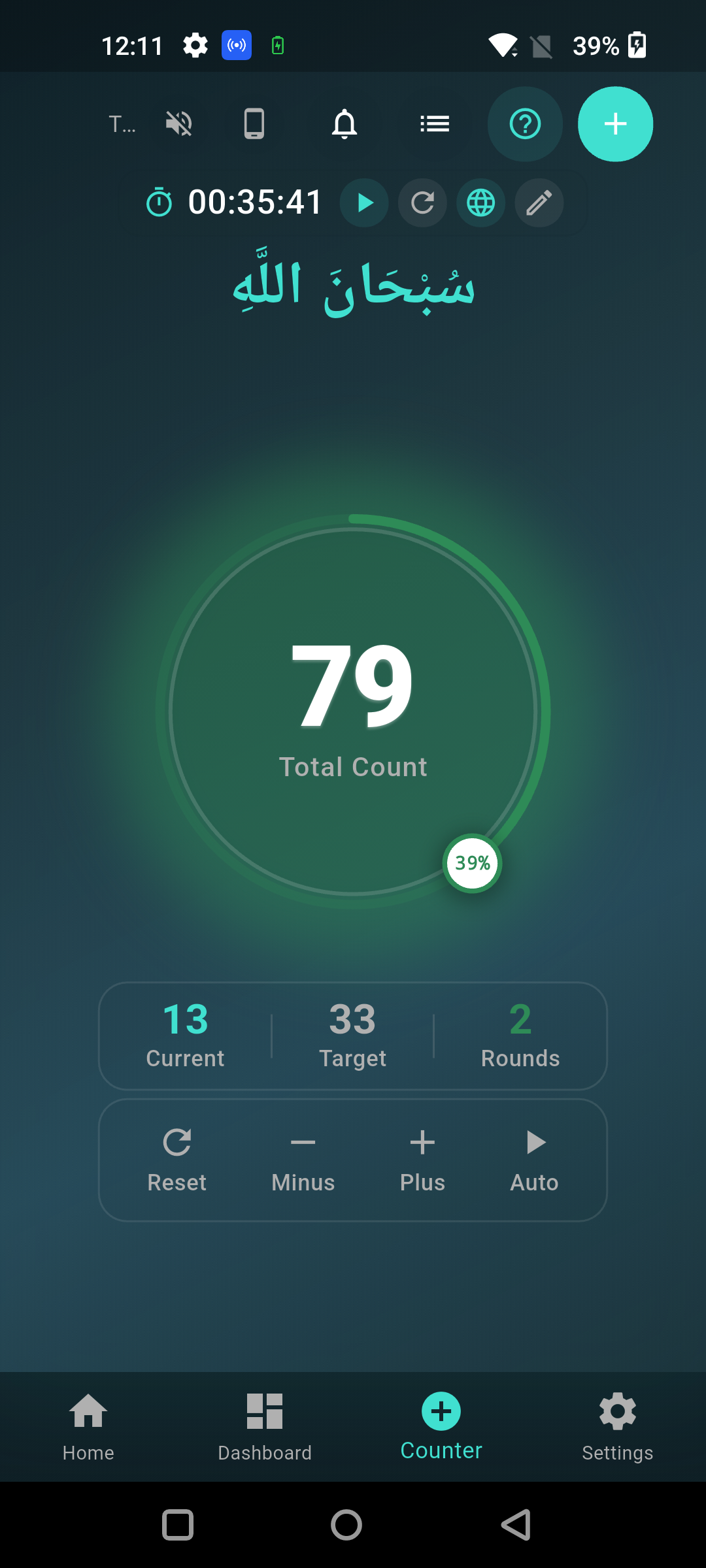
Digital tasbih counter vs a physical counter — what's the difference?
The core difference is that a physical tasbih (misbaha) uses strung beads you move by hand, while a digital counter uses a button or screen tap to track the number — the digital version adds automatic totals, reminders, and history that beads cannot provide. A string of prayer beads is tactile and needs no battery or charge, which is why many people still keep one for quiet, screen-free dhikr, especially in the mosque or before sleep.
A digital tasbih counter, whether a handheld device or a phone app, removes the need to recount from the start if you lose your place, and it can silently keep a long-term record of how much dhikr you've done over days, weeks, or months. This is especially useful for people doing large counts (500, 1,000, or more) as part of a daily wird, or for those tracking dhikr goals during Ramadan or after Fajr and Maghrib prayers. Neither option is "more correct" — the Prophet ﷺ and his companions used their fingers and small stones, so any tool that helps you remember Allah with focus and consistency serves the same purpose.
What is a tasbih/tasbeeh app and how is it different from a handheld device?
A tasbih or tasbeeh app is a smartphone application that turns your phone into a digital dhikr counter, adding features like saved presets, Arabic text, statistics, and reminders that a simple handheld clicker cannot offer. Because almost everyone already carries a phone, a tasbeeh counter app removes the need to buy or carry a separate device, and it's free to download for anyone who wants to start immediately.
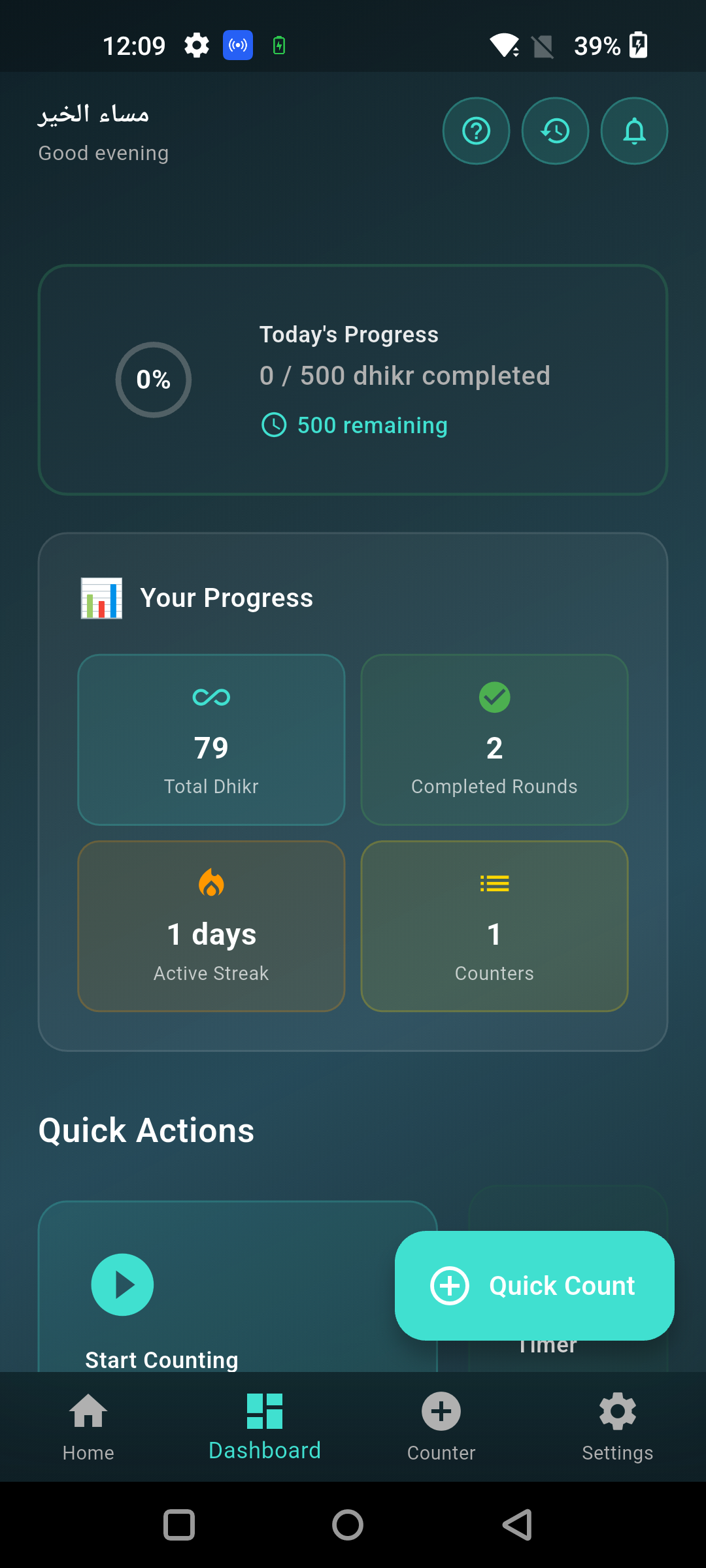
Apps like Tasbeeh Counter also solve a problem physical counters have always had: once the beads or the small screen resets, the history is gone. An app can store every session, show weekly and monthly trends, let you switch between dozens of common dhikr (istighfar, salawat, the 99 names of Allah) without buying separate rings for each, and sync your progress across the day even if you close and reopen the app.
Why do Muslims use a tasbih counter for dhikr?
Muslims use a tasbih counter to keep an accurate count of dhikr so they can focus on the remembrance of Allah instead of mentally tracking numbers, and to fulfil specific counted phrases the Prophet ﷺ taught. The Qur'an commands frequent remembrance directly: "O you who believe! Remember Allah with much remembrance" (Qur'an 33:41), and dhikr is described as a source of peace: "Verily, in the remembrance of Allah do hearts find rest" (Qur'an 13:28).
Several authentic hadith describe specific counted dhikr. The Prophet ﷺ said: "Whoever says SubhanAllahi wa bihamdihi one hundred times a day, his sins will be wiped away even if they are like the foam of the sea" (Sahih al-Bukhari 6405, Sahih Muslim 2691). He also taught that two phrases are light on the tongue but heavy on the scale of good deeds: "SubhanAllahi wa bihamdihi, SubhanAllahil-Azim" (Sahih al-Bukhari 6406, Sahih Muslim 2694). Because these are meant to be repeated a set number of times — 33, 99, or 100 — a counter (bead, ring, or app) helps a person complete the exact count without losing track mid-dhikr.
What can you count with a digital tasbih counter?
A digital tasbih counter can count any repeated dhikr or prayer — the three most common are SubhanAllah (Glory be to Allah), Alhamdulillah (All praise is due to Allah), and Allahu Akbar (Allah is the Greatest), usually done 33 times each after the five daily prayers. Beyond the basic tasbeeh set, people also use a counter for istighfar (seeking forgiveness), salawat (sending blessings on the Prophet ﷺ), La ilaha illallah, the 99 names of Allah (Asma-ul-Husna), and personal wird or dhikr routines assigned by a teacher or spiritual guide.
A good tasbeeh counter app lets you save each of these as a separate preset with its own target count, so you're not resetting the counter and trying to remember which phrase you were on. This matters most during high-volume dhikr, such as counting istighfar 100 times daily or completing a 1,000-count salawat goal, where losing track means starting over.
How to choose the right digital tasbih counter (device or app)
Choose a physical device if you want something screen-free and tactile for the mosque or before sleep, and choose an app if you want history tracking, multiple dhikr presets, and zero cost — for most people today, a free app on the phone they already carry is the more practical choice. Look for a few things regardless of which you pick: does it let you set a custom target, does it vibrate or alert when you hit your goal, and does it save your progress so a accidental tap or app close doesn't erase your count.
If you're choosing an app, also check whether it works offline (dhikr shouldn't need an internet connection), whether it supports both large-button tap counting and hardware volume-button counting for quiet, screen-off counting in your pocket, and whether your data stays private and stored only on your device. Tasbeeh Counter is built around exactly this: fast tap or volume-button counting, saved dhikr presets, Arabic text with transliteration, and fully local, private storage with no account required.
Ready to try a digital tasbih counter?
Download the free Tasbeeh Counter app and start counting your dhikr accurately today — no signup, no ads interrupting your worship, just a clean digital tasbih/tasbeeh counter built for daily use. Get it at tasbeehcounter.app.
FAQ
Is a digital tasbih counter allowed in Islam? Yes. There is no religious restriction on the tool used to count dhikr — the Prophet ﷺ and companions counted on fingers and with small stones, and scholars have generally permitted beads, rings, and digital devices since the underlying dhikr itself is what matters, not the counting method.
What is the difference between tasbih and tasbeeh? Tasbih and tasbeeh are two English spellings of the same Arabic word (تسبيح), referring to the act of glorifying Allah, typically by saying SubhanAllah. Both spellings are used interchangeably for the beads, the counter, and the practice itself.
Can I use a digital tasbih counter app instead of buying a physical counter? Yes, an app works exactly the same way as a physical counter — you tap instead of moving a bead — and it adds features like history, presets, and reminders that a basic handheld device usually doesn't have.
How many times should I do tasbeeh after prayer? A common practice, based on hadith, is to say SubhanAllah, Alhamdulillah, and Allahu Akbar 33 times each after the five daily prayers, sometimes completed to 100 with La ilaha illallahu wahdahu la sharika lah. Counts can vary by personal wird or teacher's guidance.
Does a tasbeeh counter app need internet to work? No, a well-built dhikr counter app like Tasbeeh Counter works fully offline since counting and saving your dhikr sessions doesn't require any server connection.
Is my data private when I use a tasbeeh counter app? With Tasbeeh Counter, yes — your counts and session history are stored locally on your device, not uploaded to any account or server, so your dhikr practice stays private.