If you are choosing between Tasbeeh Counter and eTasbih (published on Google Play as "Tasbeeh Counter: Zikr & Tasbih" by AwardSofts), the honest answer is that both are free, ad-free, and built for the same basic purpose: keeping an accurate number while you recite dhikr. They differ mainly in track record, a few specific features, and how each declares its data practices. This comparison uses only what each app's own Google Play listing states, checked directly rather than assumed, because a fair comparison should not invent features or ratings for either side.
Quick answer: eTasbih has a much longer track record (reviews since 2019, 500K+ downloads, a 4.8 rating from 18.9K reviews) and includes background/hands-free autoplay counting. Tasbeeh Counter is newer with far fewer reviews, but lists volume-button counting, a Qibla compass, a wird builder, and a "no data collected" privacy declaration. Neither claim about the other app should be taken from memory — check the listings yourself, since app store pages change.
What are Tasbeeh Counter and eTasbih?
eTasbih is the common name for "Tasbeeh Counter: Zikr & Tasbih," developed by AwardSofts and first reviewed on Google Play in 2019. Its own description calls it "a completely free, 100% ad-free digital tasbih counter (zikirmatik)" that "faithfully simulates a real tasbeeh (prayer beads)" and is also available on iOS.
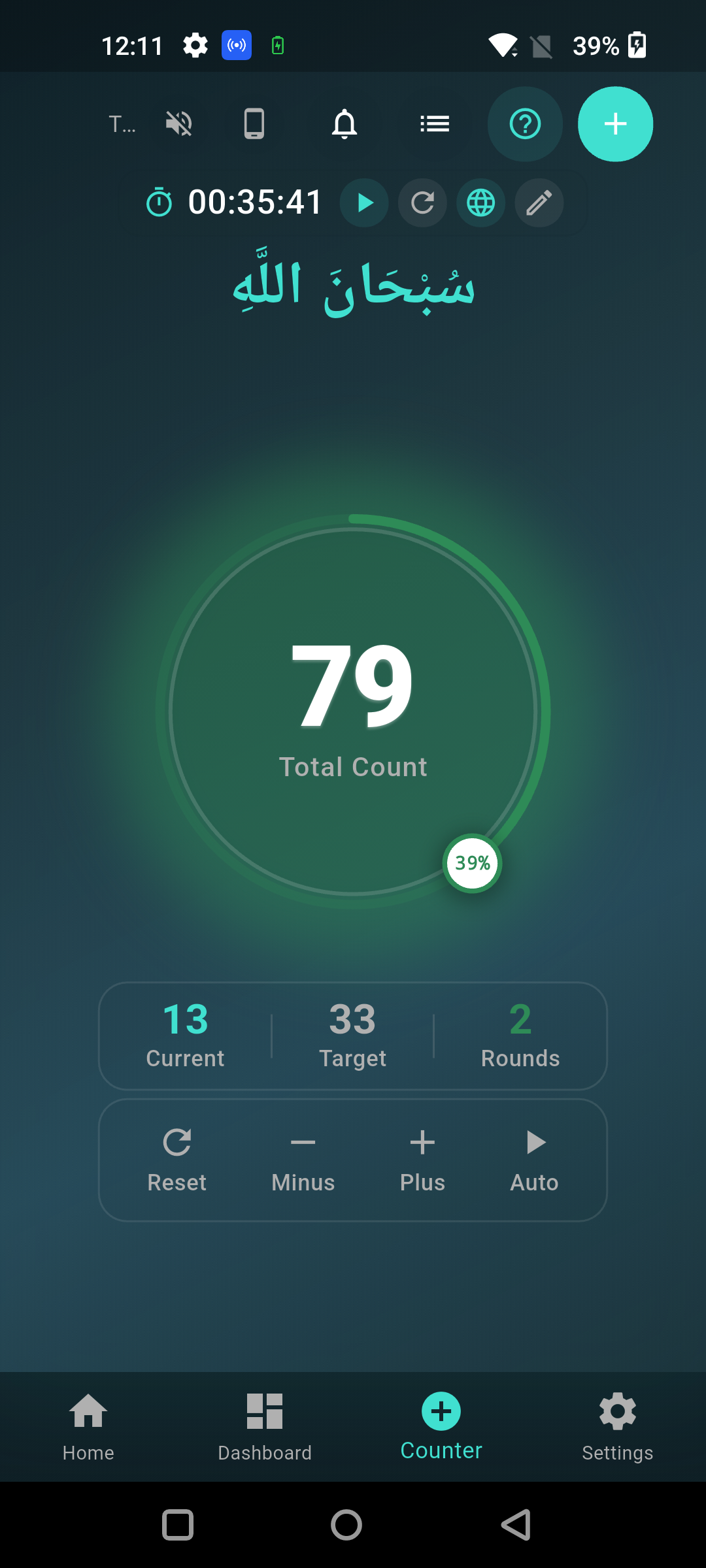
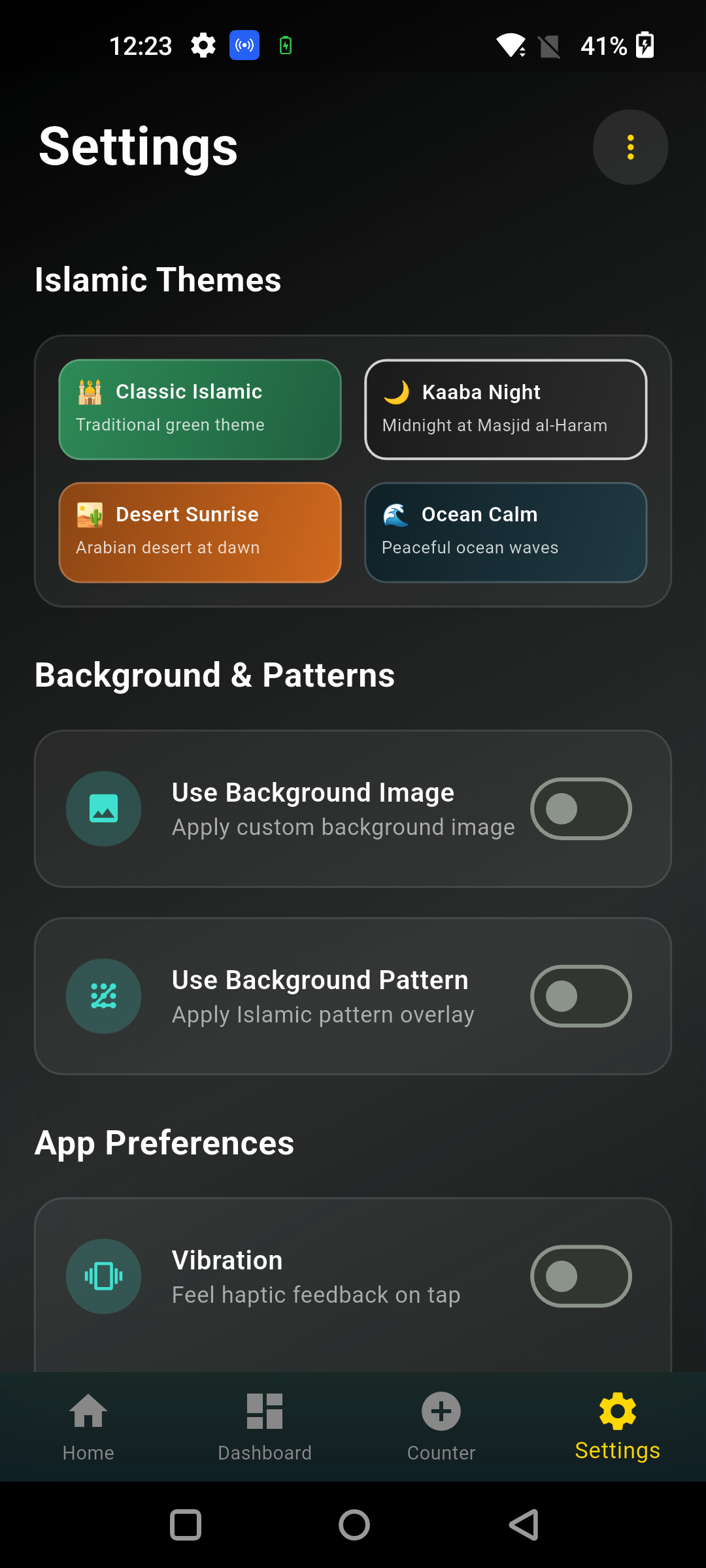
Tasbeeh Counter ("Tasbeeh Counter - Digital zikr") is developed by Amanah Studio and is the app behind tasbeehcounter.app. Its listing describes tap, volume-button, and auto-count modes, a dhikr library with Arabic text and transliteration, prayer-time notifications, and a declared no-account, no-data-collected model.
How do the two apps compare feature-by-feature?
The table below reflects only what each Play Store listing states at the time this was checked. Store listings are updated by their developers over time, so treat this as a snapshot, not a permanent ranking.
| Aspect | eTasbih (AwardSofts) | Tasbeeh Counter (Amanah Studio) |
|---|---|---|
| Rating / reviews | 4.8 stars, 18.9K reviews | 5.0 stars, 20 reviews |
| Downloads | 500K+ | 1K+ |
| Price | Free, "no paid upgrades" | Free, no ads stated |
| Counting input | Tap on-screen bead | Tap, volume buttons, auto-count |
| Autoplay / hands-free | Yes — records your pace and auto-counts at that speed | Auto-count mode listed; hands-free pacing not separately described |
| Background counting | Yes, listing states it continues while multitasking or screen off | Not stated in the listing |
| Built-in dhikr / du'a library | Yes — Asma ul-Husna, Asma-un-Nabi, common counts | Yes — daily adhkar library with Arabic text and transliteration |
| Custom dhikr phrases | Yes, create/edit/save | Yes, custom dhikr with personal targets |
| Stats & history | Daily, weekly, 40-day, and yearly summaries | Daily, weekly, monthly stats and session history |
| Themes | 5 themes, light and dark, adjustable bead style | 4 Islamic themes, dark mode |
| Extra tools | Black screen mode | Qibla compass, daily wird builder, home-screen widget |
| Data collected (per listing) | Personal info, files/docs and 2 other categories; no third-party sharing | "No data collected" declared |
| Platforms | Android and iOS | Android (this comparison covers the Android listing only) |
| Last updated | Aug 26, 2025 | Mar 25, 2026 |
Where does eTasbih genuinely have the advantage?
To answer this plainly: eTasbih's biggest, verifiable strength is its track record. Reviews on its Play Store page go back to 2019, it has accumulated roughly 500,000+ downloads and 18.9K reviews at a 4.8 average, and its developer has been actively responding to reviews and shipping updates (the listing's "What's new" notes cite backup/restore fixes and new themes). That kind of history is not something a newer app can claim, and it matters if you want an app whose long-term stability is already proven by a large user base.
Feature-wise, eTasbih's autoplay mode — recording your recitation pace from a short sample and then auto-incrementing the count at that rhythm — is a genuinely distinct, hands-free approach, and its listing states the counter keeps running in the background while the screen is off or you switch apps. It also offers a dedicated black-screen mode for low-light, distraction-free sessions, and its "no paid upgrades" line means there is no in-app purchase tier to consider.
Where does Tasbeeh Counter differ?
Tasbeeh Counter's listing states three counting inputs — tap, hardware volume buttons, and an auto-count mode — where eTasbih's listing describes tap-based counting plus the autoplay feature above. Volume-button counting is useful if you want to count without looking at the screen at all, for example with the phone in a pocket.
On privacy, Tasbeeh Counter's Play Data Safety section currently declares "No data collected," a stronger claim than eTasbih's declaration of collecting personal info and file/document data (while stating none of it is shared with third parties). Readers who weigh data minimization heavily should check both Data Safety sections themselves, since these are developer-declared and can change between updates.
Tasbeeh Counter also lists tools eTasbih's page does not mention: a Qibla compass, a daily wird builder for building custom morning/evening/post-salah routines, and a home-screen widget. What it does not yet have, per its own listing, is anything close to eTasbih's review volume — 20 reviews is not enough to draw conclusions about long-term reliability the way 18.9K reviews can.
Which one should you choose?
If you value a long-established app with a large, verified user base and want hands-free autoplay counting, eTasbih's track record is real and worth weighing seriously — that is not a claim we invented, it is what its own listing and years of reviews show. If you specifically want volume-button counting, a Qibla compass, a wird builder, or the stronger "no data collected" privacy line, Tasbeeh Counter may fit better, understanding that it is the newer app with a much smaller review base so far.
Either way, remember what a counter is for. A tap, a bead, or an auto-counting screen only tracks a number — it does not replace the words, the meaning, or the presence of heart that dhikr calls for. Allah instructs believers to remember Him often and without limit in Quran 33:41. Choose whichever tool helps you keep that remembrance steady, and treat the app itself as a small aid, never the point of the worship.
Frequently Asked Questions
Is eTasbih the same as Tasbeeh Counter?
No. They are two separate apps from two separate developers. eTasbih is "Tasbeeh Counter: Zikr & Tasbih" by AwardSofts; Tasbeeh Counter is "Tasbeeh Counter - Digital zikr" by Amanah Studio, the app behind tasbeehcounter.app. Their similar names can cause confusion when searching, so check the developer name on the store listing before installing.
Does eTasbih really have no ads?
Its Play Store listing describes it as "100% ad-free" with "no paid upgrades." That is the developer's own claim on the current listing; app monetization can change between updates, so it is worth rechecking the listing if this matters to you.
Which app has more reviews?
eTasbih has substantially more reviews and downloads at the time this was checked — 18.9K reviews and 500K+ downloads, versus 20 reviews and 1K+ downloads for Tasbeeh Counter. A larger review count generally means more real-world testing over time, though it does not by itself tell you which app fits your specific routine better.
Does either app work offline?
Both list core counting as a local, on-device function. Always test any counter app in airplane mode before relying on it while travelling, since optional features like backup or update checks may still need a connection.