Muslims counting dhikr on a phone or in a browser are trusting that tool with something personal: how often they remember Allah, when, and how consistently. That makes reliability (does the count survive, does it work when you need it) and privacy (what is collected, where it lives) different questions from which app looks nicest. This guide compares Tasbeeh Counter with other tasbeeh and dhikr counting options on exactly those two points, using only what each platform actually publishes about itself.
This is not a features roundup. It does not rank apps by stars or downloads. It looks at four practical questions for each option: does it require an account, does core counting work offline, does it show ads, and where does your dhikr history actually live. Some findings favour Tasbeeh Counter; others do not, and we say so plainly. A counter earning your trust on these points still does not make the counting itself more meritorious — it is a tool, not the point of the worship. Allah instructs believers to remember Him often (Quran 33:41); the app is only there to hold a number while you do that.
Quick answer: Tasbeeh Counter needs no account for counting, works offline, and shows no ads, storing dhikr data on your device. Several competing apps also avoid mandatory accounts and work offline, but ad presence and background data collection vary meaningfully between them — check each platform's own disclosures rather than assuming.
Which online tasbeeh platform is most private and reliable?
No single platform wins on every point, so the honest answer depends on which trade-off matters more to you. Tasbeeh Counter and the app widely marketed as eTasbih both avoid showing ads on the free tier, but they differ in what they collect in the background. A popular app simply named "Zikr" works offline and discloses that it collects no personal data, yet it does carry ads and — per its own Play Store label — has no in-app way to delete stored data. Generic web-based counters are the most inconsistent group: some are genuinely local-only with no sign-up, while others run analytics or ad-tracking scripts even when their landing page says "no ads." The table below summarises what each platform discloses about itself; sources are the platforms' own Play Store listings, Data Safety labels, and published privacy policies as of this writing, since those can change over time.
| Platform | Account required? | Works offline? | Shows ads? | What it discloses collecting |
|---|---|---|---|---|
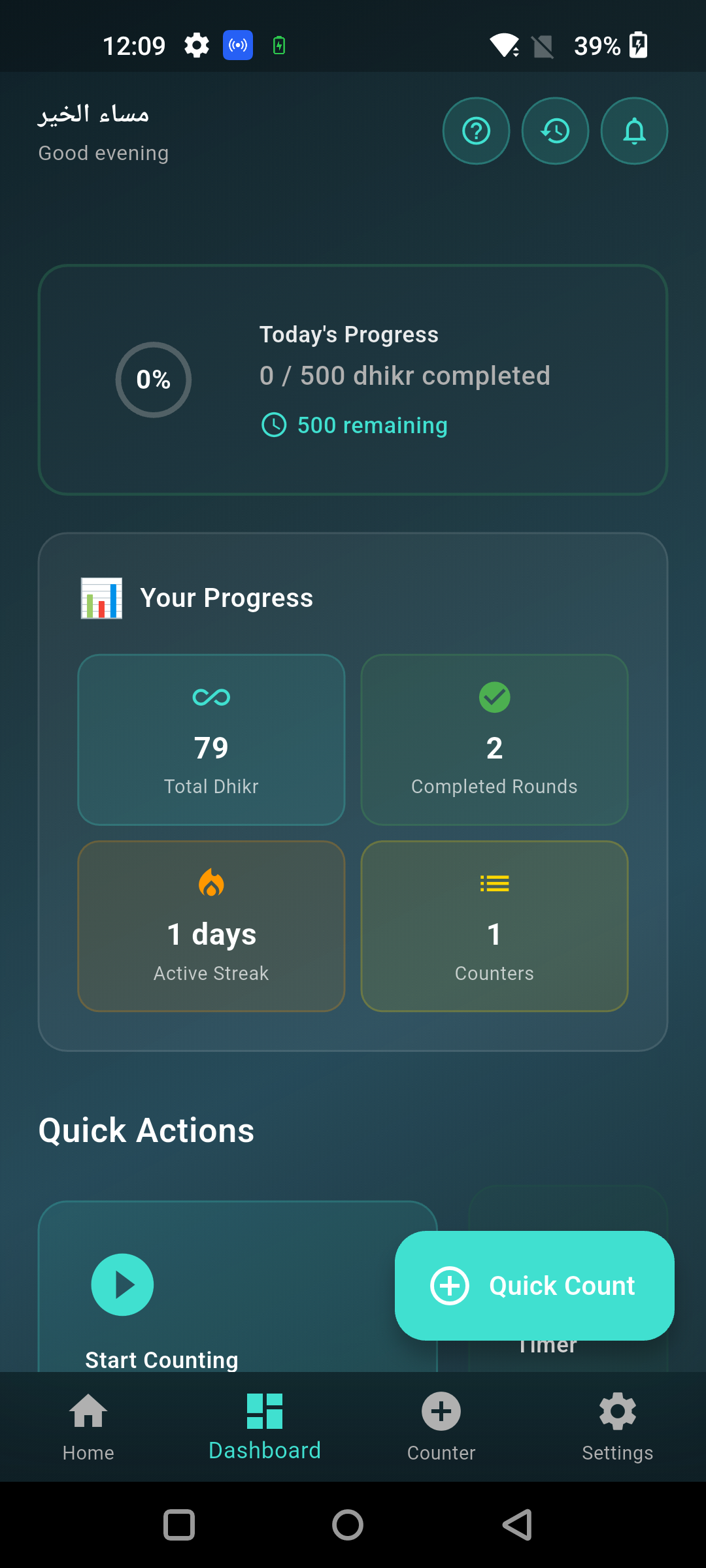
| Tasbeeh Counter | No, for counting | Yes, core counter | No | No account data; local session storage on-device |
| "Zikr: Digital Tasbih Counter" (xtra.appstudios.zikr) | Not stated as required | Yes, offline support stated | Yes (Play Store discloses ads + in-app purchases) | Play Data Safety label: "no data collected"; also states stored data "can't be deleted" |
| eTasbih ("Tasbeeh Counter: Zikr & Tasbih" by AwardSofts) | Not stated as required for basic counting | Not explicitly stated in listing | No ads badge shown; app markets itself as ad-free | Play Data Safety label discloses device/other IDs, app activity, files and docs, and name + email address |
| Generic web-based tasbeeh counters | Usually no, for the free counter itself | Often yes, once the page has loaded | Varies; some claim "no ads" while a site-wide policy still allows ad or analytics cookies | Varies by site; some state explicitly that counts stay in the browser and nothing is sent to a server, others do not publish a policy at all |
Does a tasbeeh app need an account to work?
Most of the platforms compared here let you start counting without creating an account, though the reasons and exceptions differ. Tasbeeh Counter's core counter works with no sign-up. The Play Store listing for Zikr: Digital Tasbih Counter does not mention an account as a requirement either. eTasbih's description does not describe account creation as necessary for basic counting, but its own Play Store Data Safety label discloses collection of a name and email address — the listing does not explain when or why that data is gathered, so it likely relates to an optional backup or restore feature rather than being required just to tap a counter. Among generic web tools, a no-signup counter is common, with some sites offering an optional paid account purely for cross-device syncing. If an app or site asks for an account before you can count at all, treat that as a deliberate design choice worth questioning, not a technical necessity — nothing about counting dhikr requires identifying you.
Do these tasbeeh counters work without internet?
Core counting works offline on most of the platforms reviewed, but "offline" is not always defined the same way. Tasbeeh Counter's counting and local session storage work without a connection; optional features such as prayer-time calculation or update checks can use one. Zikr: Digital Tasbih Counter's listing explicitly claims offline support. eTasbih's own description does not make an explicit offline claim either way, so we are not asserting it. Generic web tools split into two groups: some state plainly that once the page has loaded, the counter keeps working without a connection, while others make no such claim and should be assumed to need a live connection unless you test them yourself, ideally in airplane mode before you depend on one during travel or in an area with unreliable data.
Do tasbeeh counter apps show ads?
Ad presence is one of the clearest, most verifiable differences between these platforms. Tasbeeh Counter shows no ads. eTasbih's listing carries no "Contains ads" badge and the app markets itself as ad-free. Zikr: Digital Tasbih Counter's Play Store listing does show both a "Contains ads" and an "In-app purchases" badge, meaning the free experience is ad-supported unless you pay to remove them. Generic web counters are the least predictable here: a page's own marketing copy ("no ads interrupting your spiritual moments") does not always match the site's broader privacy policy, which can still permit analytics or advertising cookies "when allowed." Read the specific tool's policy, not just its landing-page tagline, before assuming a web counter is ad-free.
What data do these apps actually collect?
Published Data Safety labels and privacy policies are the only honest source here — app descriptions alone are marketing copy. Tasbeeh Counter does not collect account data for the counting feature; dhikr sessions are stored on the device. Zikr: Digital Tasbih Counter's official Play Store Data Safety label states no data is collected and none is shared with third parties, though the same label notes that stored data cannot be deleted through the app, which is a distinct point worth knowing if you value being able to erase your history later. eTasbih's Data Safety label discloses collection of device or other IDs, app activity described as "other user-generated content," files and documents, and a name and email address — categories that suggest an optional backup or account layer exists even though the app description does not walk through it. Generic web tools vary the most: a handful publish a clear, specific policy stating no third-party ad trackers and no server-side storage for the free tool, while others display no privacy policy on the page at all, which itself is information — the absence of a policy is not the same as having nothing to disclose.
Where is your dhikr history stored?
On Tasbeeh Counter, dhikr history is stored locally on your device, not on a remote account tied to your identity. That means clearing app data or switching phones without a manual backup will lose your history, the same trade-off any local-first tool makes. Zikr: Digital Tasbih Counter's listing describes history and save features without mentioning a cloud account, which is consistent with its "no data collected" label, though the app itself does not state this explicitly. eTasbih's listing advertises detailed daily, weekly, and yearly statistics; given its Data Safety label discloses files and personal info, some of that history may involve their servers for users who engage the backup/restore feature, though this is not confirmed either way by the public listing. On generic web counters, history typically lives only in that browser's local storage — closing a private browsing window, clearing site data, or opening the same page on a different device will usually not carry your count forward unless the site offers a specific paid sync feature.
What should you check before trusting a tasbeeh platform with your data?
Check the platform's own disclosures, not its slogan. A "100% private" tagline on a landing page is marketing; a Play Store Data Safety label or a dated, specific privacy policy is a disclosure you can act on. Before choosing a platform:
- Read the actual Data Safety label or privacy policy, not just the app description.
- Test offline behaviour yourself — put the device in airplane mode and try counting.
- Check for an ads badge on the store listing rather than trusting "ad-free" copy alone.
- Look for a way to delete your data, and note if the platform states data cannot be deleted.
- Confirm whether an account is optional or required, and what happens to counting if you decline one.
- Be wary of a missing privacy policy on any web-based counter — no policy is itself a data point.
None of this replaces sincerity in the dhikr itself. A counter that respects your privacy and works reliably simply gets out of the way, which is the most any counting tool should try to do.
Which platform should you choose?
Choose based on which trade-off you are willing to accept, since none of the platforms compared here is flawless on every axis. If avoiding ads and background data collection matters most, Tasbeeh Counter and eTasbih both avoid showing ads, though eTasbih's Data Safety label discloses more account-adjacent data than Tasbeeh Counter's. If you specifically want an app that discloses zero data collection and don't mind ads, Zikr: Digital Tasbih Counter's label supports that, with the caveat that its own listing says stored data cannot be deleted. If you only need an occasional count and do not want to install anything, a generic web-based counter with a clear, specific privacy policy and no sign-up can be enough, provided you read that policy rather than trusting the landing page alone.
For counting without an account, without ads, and with dhikr sessions stored on your own device, try the free Tasbeeh Counter app. It will not make your remembrance more sincere — only your attention and intention do that — but it should not get in the way of it either.
Frequently Asked Questions
Does Tasbeeh Counter require an account?
No. Core counting works without creating an account, and dhikr session data stays on your device rather than being tied to an online profile.
Is there one single "Zikar" app that dominates the category?
No. Several unrelated apps use names like "Zikar," "Ziker," or "Zikr" for dhikr counting, and none is a clear market leader. This guide reviews the most-installed app matching that name, "Zikr: Digital Tasbih Counter," and readers comparing options should check the exact developer and package name before installing, since apps sharing a similar name can have very different data practices.
Do ad-free claims on tasbeeh counter websites always hold up?
Not always. Some web-based counters state "no ads" on the counting page itself while their site-wide privacy policy still permits analytics or advertising cookies elsewhere on the same domain. Read the specific privacy policy rather than relying on a landing-page tagline.
If an app collects a name and email address, does that mean my dhikr count is exposed?
Not necessarily, and we do not claim that for any specific app. A Play Store Data Safety label discloses categories of data collected, not how that data is used internally. If a listing does not explain why personal information is collected, that is a reasonable question to raise with the developer before trusting the app with sensitive routines, rather than an accusation in itself.
Can I verify these claims myself instead of trusting this article?
Yes, and you should. Play Store listings show a "Data safety" section under each app's details, Apple lists an "App Privacy" section on each App Store page, and reputable web tools publish a dated privacy policy. Platform disclosures can change after this article is published, so check the current listing before deciding.